9 Things to Notice in the High Andes on the Salkantay Trek
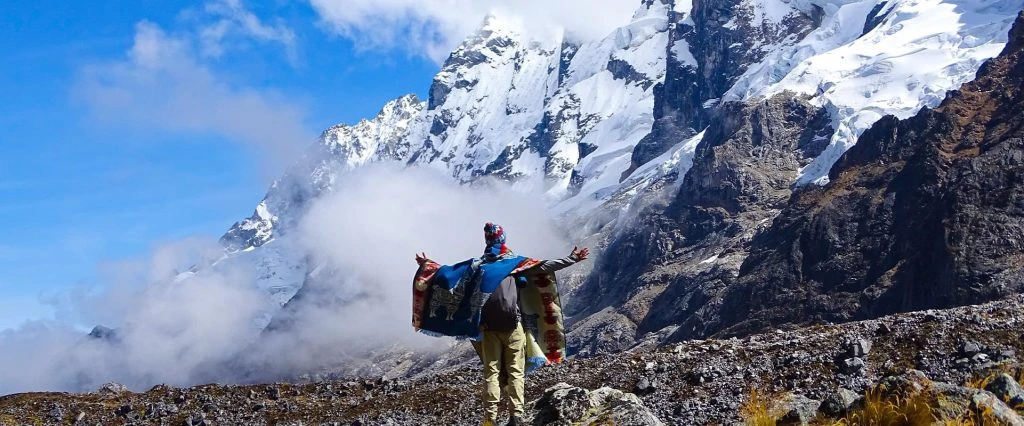
Learning to Read the Mountains
Most travelers describe the Salkantay Trek in terms of distance, altitude, or difficulty. Yet the character of the journey rarely comes from how far you walk, but from how much you begin to notice along the way.
The High Andes are not empty landscapes. They are highly specialized environments where life, geology, and human movement have adapted to extreme conditions over thousands of years. What initially appears silent or barren gradually reveals structure, resilience, and intention.
Understanding this transforms the trek. The route stops feeling like a path toward Machu Picchu and starts functioning as a passage through one of the most complex mountain ecosystems in South America.
The High Andes Environment
Along the upper section of the Salkantay route moves between roughly 3,800 and 4,600 meters above sea level, within what scientists define as the puna ecosystem. Oxygen levels decrease, temperatures fluctuate rapidly, and vegetation survives under intense solar radiation and freezing nights.
Life here does not grow abundantly. It survives strategically.
Plants remain low to resist wind. Animals conserve energy. Water shapes movement across valleys carved by ancient glaciers. Even human presence becomes seasonal and adaptive rather than permanent.
Seen closely, the landscape begins to explain itself.
9 Things to Notice Along the Salkantay Route
The following observations are not landmarks to reach, but details that reveal how nature and culture operate at altitude. Many trekkers pass them without realizing how much they explain about the Andes themselves.
I. Flora & Fauna — Survival Above 4,000 m
1. Ichu Grass
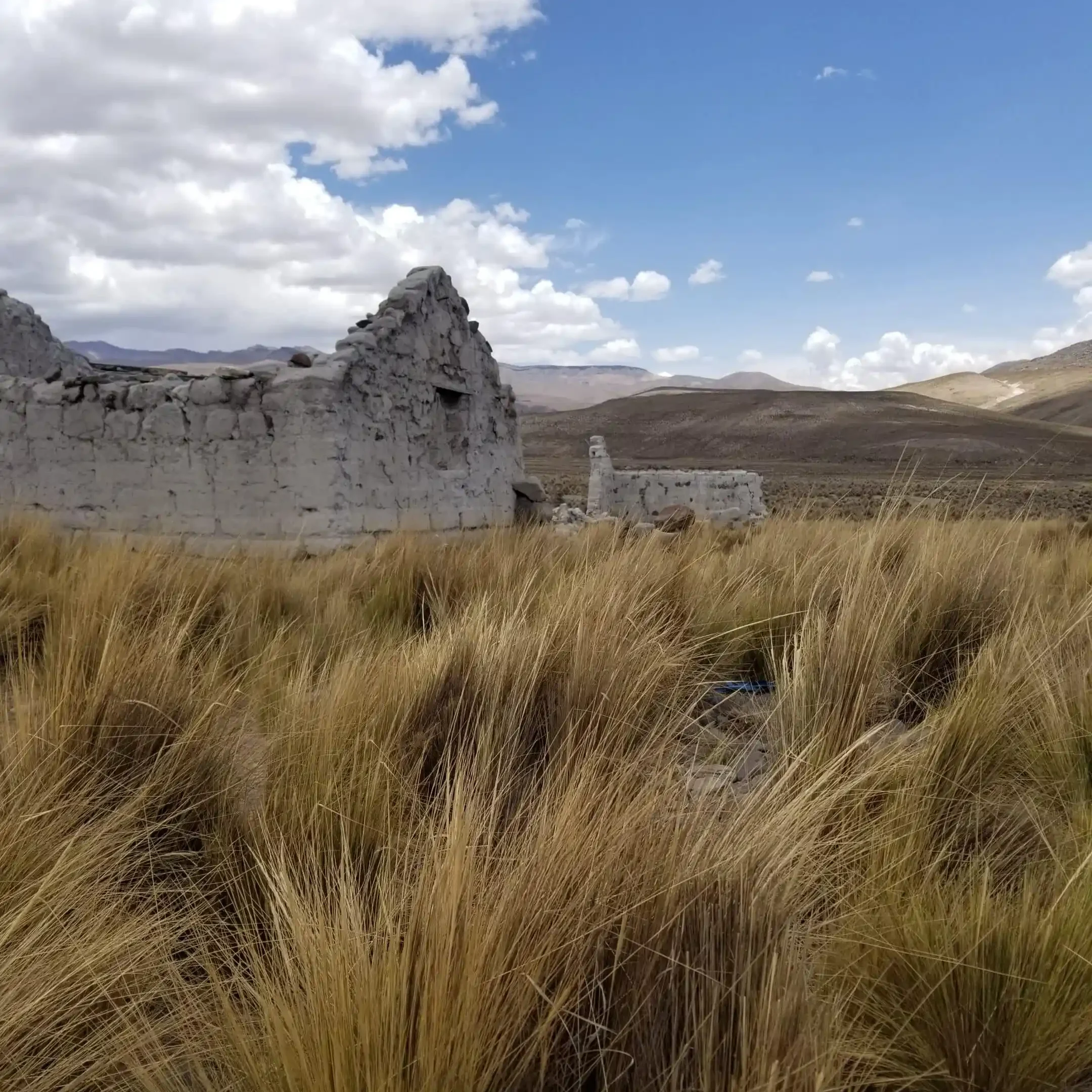
Covering vast portions of the high plateau, ichu grass is the dominant plant of the Andes above tree line. Its thin, flexible structure allows it to withstand freezing temperatures, strong winds, and poor soils. Entire grazing systems, past and present, depend on it, making this modest-looking grass one of the foundations of high-altitude life.
2. High-Altitude Birdlife
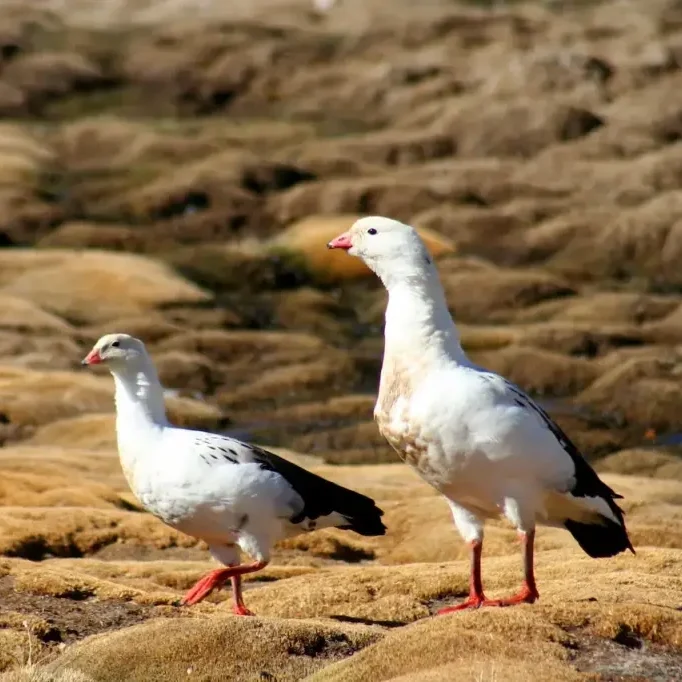
Near wetlands and alpine lagoons, travelers may notice Andean geese, ducks, or soaring raptors using thermal currents. Their presence signals something essential: reliable water sources in an otherwise harsh environment. In the High Andes, birds often reveal ecological balance long before vegetation does.
3. Vizcachas Among the Rocks
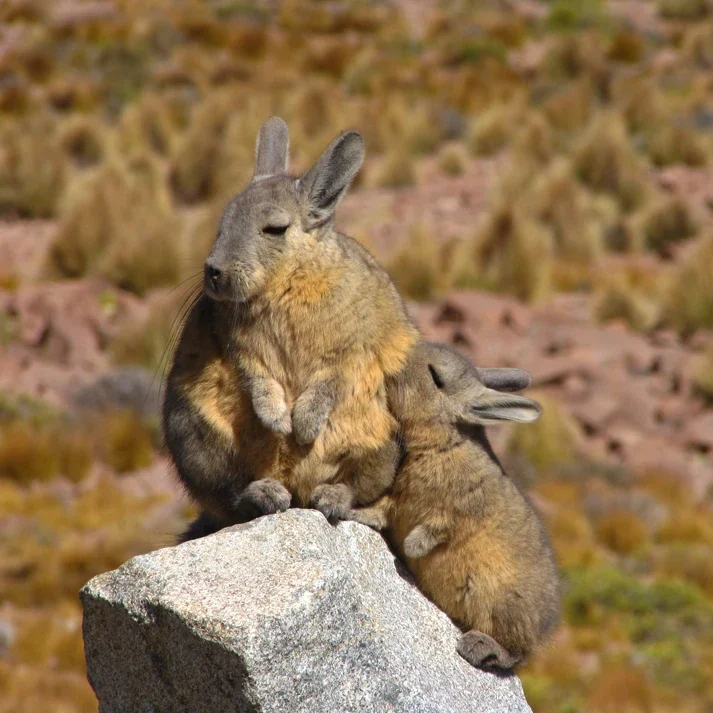
Often mistaken for rabbits, vizcachas inhabit rocky slopes and glacial moraines near mountain passes. They remain still for long periods, conserving energy in thin air before moving quickly between stone shelters. Spotting one usually means you are entering terrain shaped directly by ancient ice.
II. Geography — Reading the Andes
4. The Hanging Glacier of Salkantay
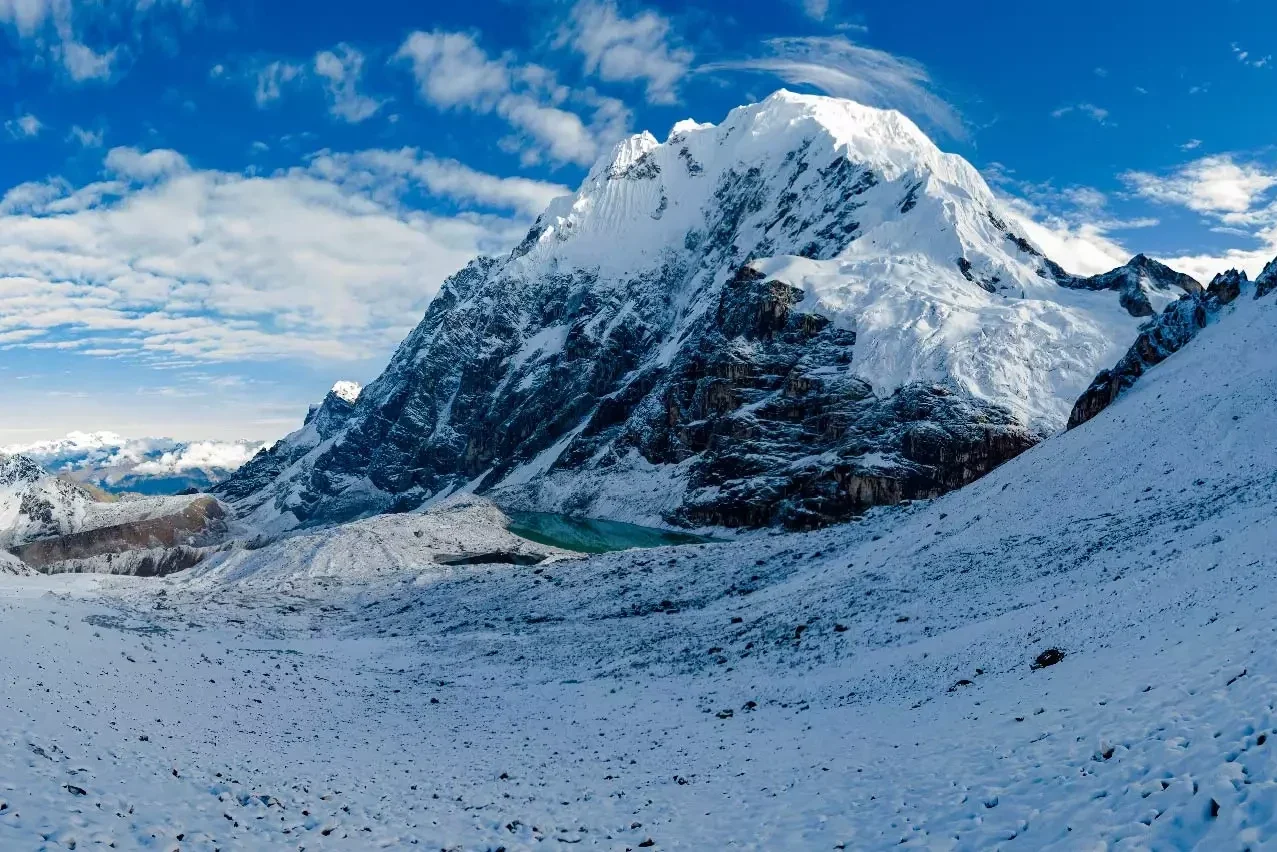
The massive ice formations visible on the slopes of Salkantay Mountain are not static scenery. These glaciers continue to shift, melt, and fracture seasonally. They feed rivers that sustain ecosystems far below, linking the highest peaks to jungle valleys days away.
5. Glacial Valleys
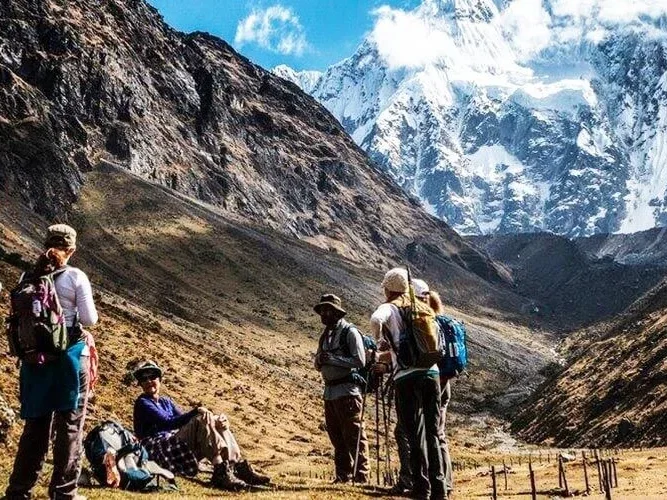
The wide U-shaped valleys along the route were carved by moving ice rather than rivers. Their scale becomes apparent when comparing steep valley walls with relatively flat floors, evidence of glaciers that once filled the entire landscape.
Walking through them is effectively walking across geological time.
6. High-Altitude Lagoons
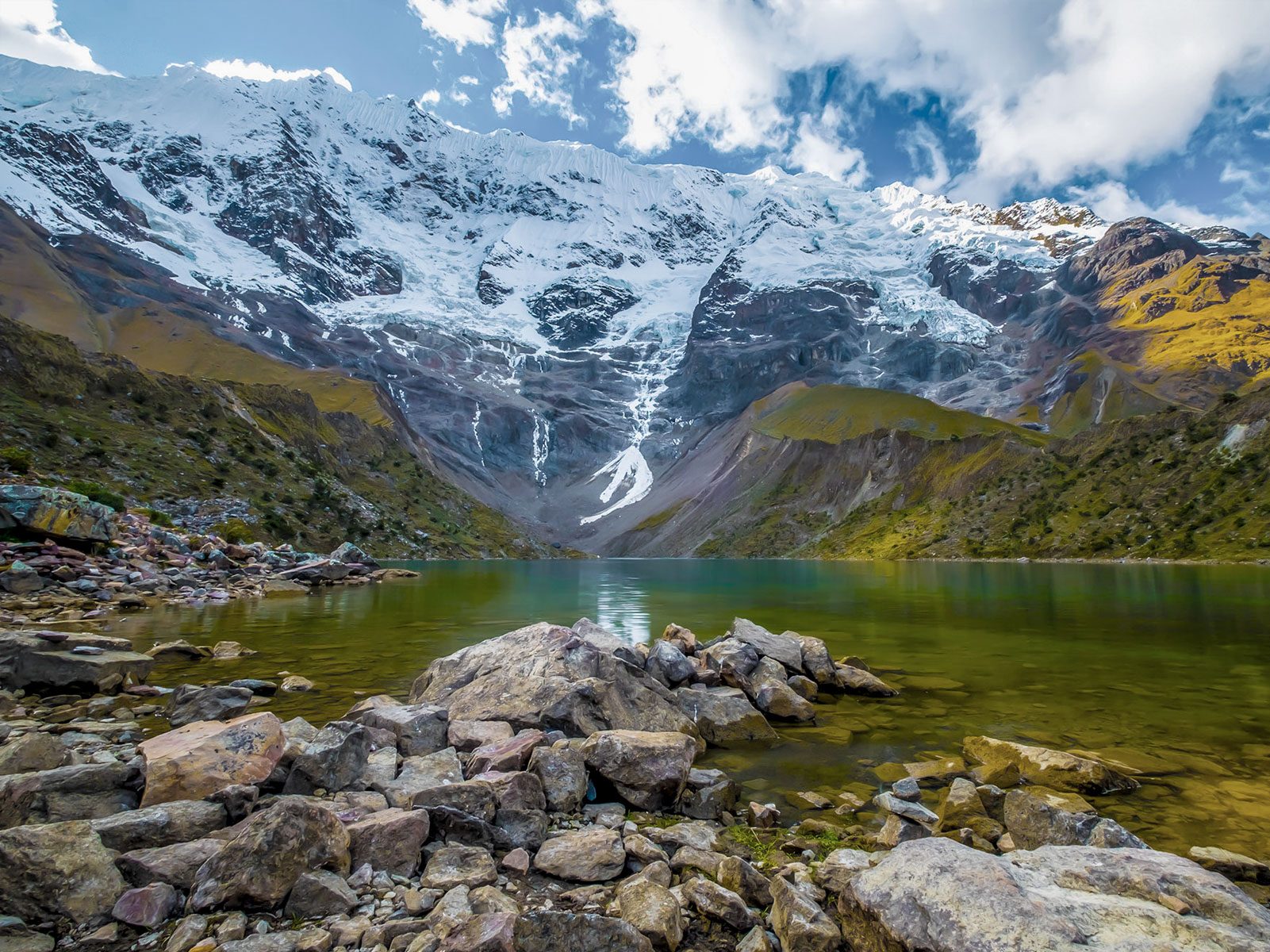
Glacial lakes such as those found near Humantay Lake display striking turquoise tones created by suspended mineral particles reflecting sunlight. These lagoons act as natural reservoirs, regulating downstream water systems throughout the region.
III. Archaeological Presence — Humans at Extreme Altitude
7. Ancient Stone Trail Foundations
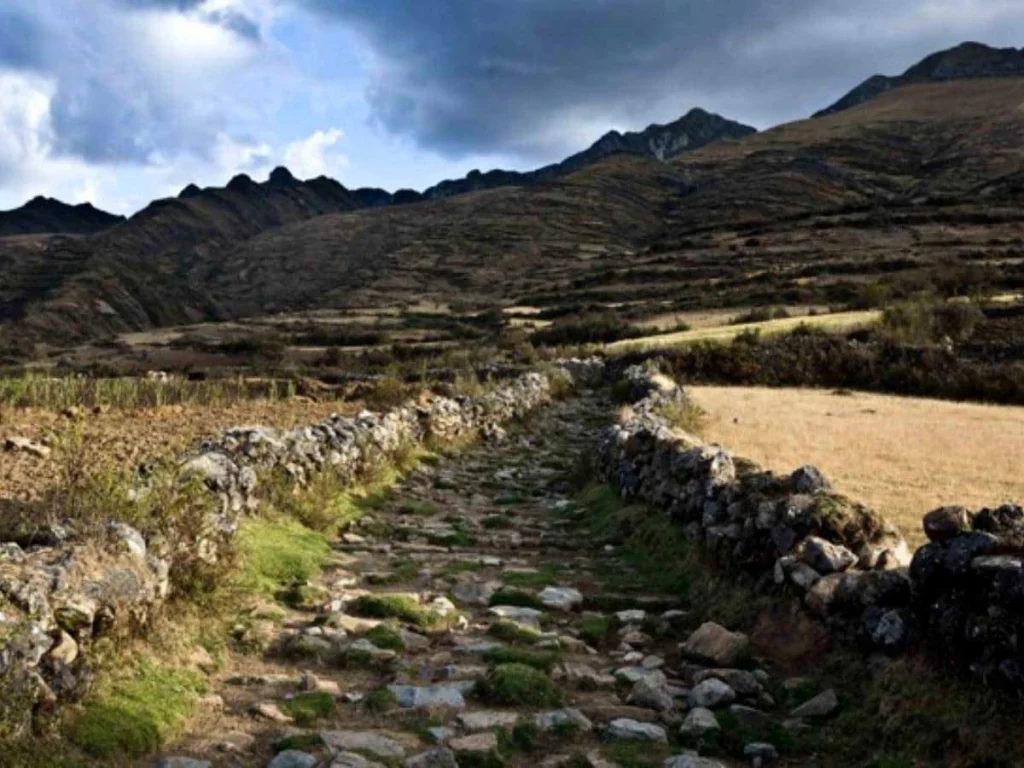
Beneath sections of the modern trekking path lie remnants of earlier Andean road systems. Carefully placed drainage stones and retaining walls demonstrate engineering solutions designed for steep terrain and heavy seasonal rains, many still functioning centuries later.
8. Apachetas
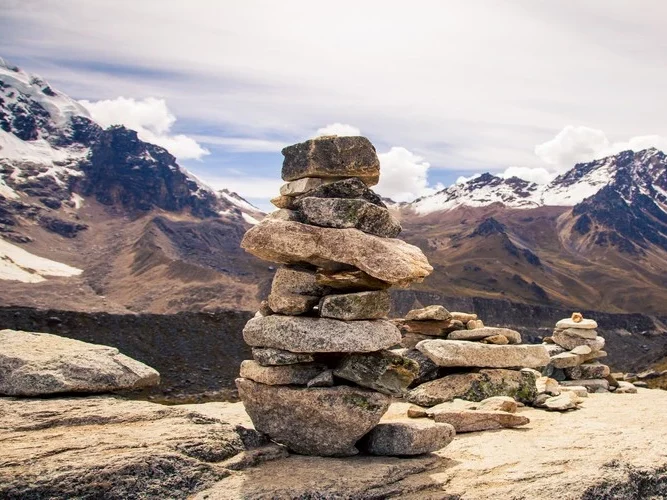
Small piles of stones known as apachetas appear near passes and transitions. Traditionally, travelers added a rock as an offering to mountain spirits, acknowledging safe passage across difficult terrain. These markers transform geography into cultural space, blending movement with ritual.
9. High-Altitude Pastoral Shelters
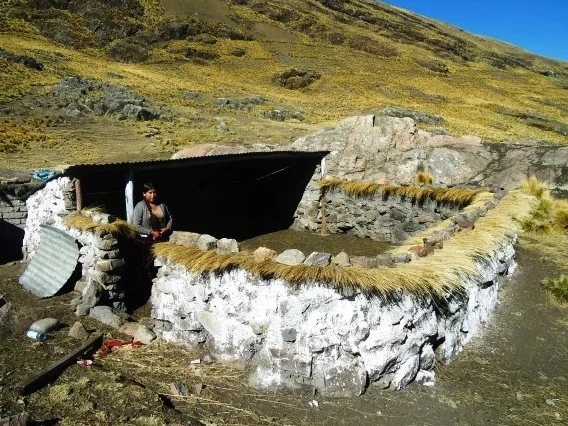
Simple stone structures scattered across the puna are seasonal shelters used by herding families. Their continued use reflects a continuity of mountain adaptation that predates modern trekking entirely. Long before adventure travel existed, these routes supported livelihoods shaped by altitude and climate.
✔ High Andes Observation Checklist
| What to Notice | Where You’re Most Likely to See It | What Makes It Interesting | □ |
| Ichu Grass Covering the Slopes | Open alpine plains and exposed mountain sides above 3,800 m | This resilient grass survives freezing nights and intense sun, forming the ecological base for grazing animals across the Andes. | □ |
| High-Altitude Birdlife | Near wetlands, streams, and alpine lagoons | Birds often indicate reliable water sources — one of the most valuable resources at extreme altitude. | □ |
| Vizcachas Among Rocky Slopes | Boulder fields and glacial moraine zones near the pass | These mountain rodents conserve energy by remaining motionless for long periods before moving rapidly between rocks. | □ |
| The Hanging Glacier of Salkantay | Visible along the approach to Salkantay Mountain | The glacier feeds entire downstream ecosystems, linking high-altitude ice directly to jungle rivers days away. | □ |
| U-Shaped Glacial Valleys | Wide valleys before and after the high pass | Their rounded shape reveals landscapes carved by ancient glaciers rather than flowing rivers. | □ |
| Turquoise Alpine Lagoons | Areas surrounding glacial lakes like Humantay Lake | Mineral particles suspended in meltwater scatter sunlight, producing the lake’s distinctive color. | □ |
| Ancient Stone Trail Foundations | Sections of stone-paved or reinforced trail | Many drainage and retaining systems still function centuries after their original construction. | □ |
| Apachetas (Stone Cairns) | Mountain passes and high transition points | Travelers traditionally leave stones as symbolic offerings requesting safe passage through the mountains. | □ |
| High-Altitude Pastoral Shelters | Remote puna grasslands away from main camps | Seasonal shelters used by herding families show that these landscapes remain economically active today. | □ |
Why Observation Changes the Trek
Reaching Machu Picchu often becomes the symbolic goal of the Salkantay Trek. Yet many travelers later realize that the most meaningful part of the journey occurred earlier, in the quiet highlands where adaptation becomes visible in every detail.
The High Andes reward attention. What first appears minimal reveals complexity; what seems remote shows continuity between nature and human presence.
Seen this way, the trek is not only a route across mountains, but an introduction to how life persists at the limits of altitude.
Learn more about this blog series here.