9 Things to Notice on the Salkantay Trek — Pt. 2: From Cloud Forest to Jungle
Where the Mountains Begin to Change
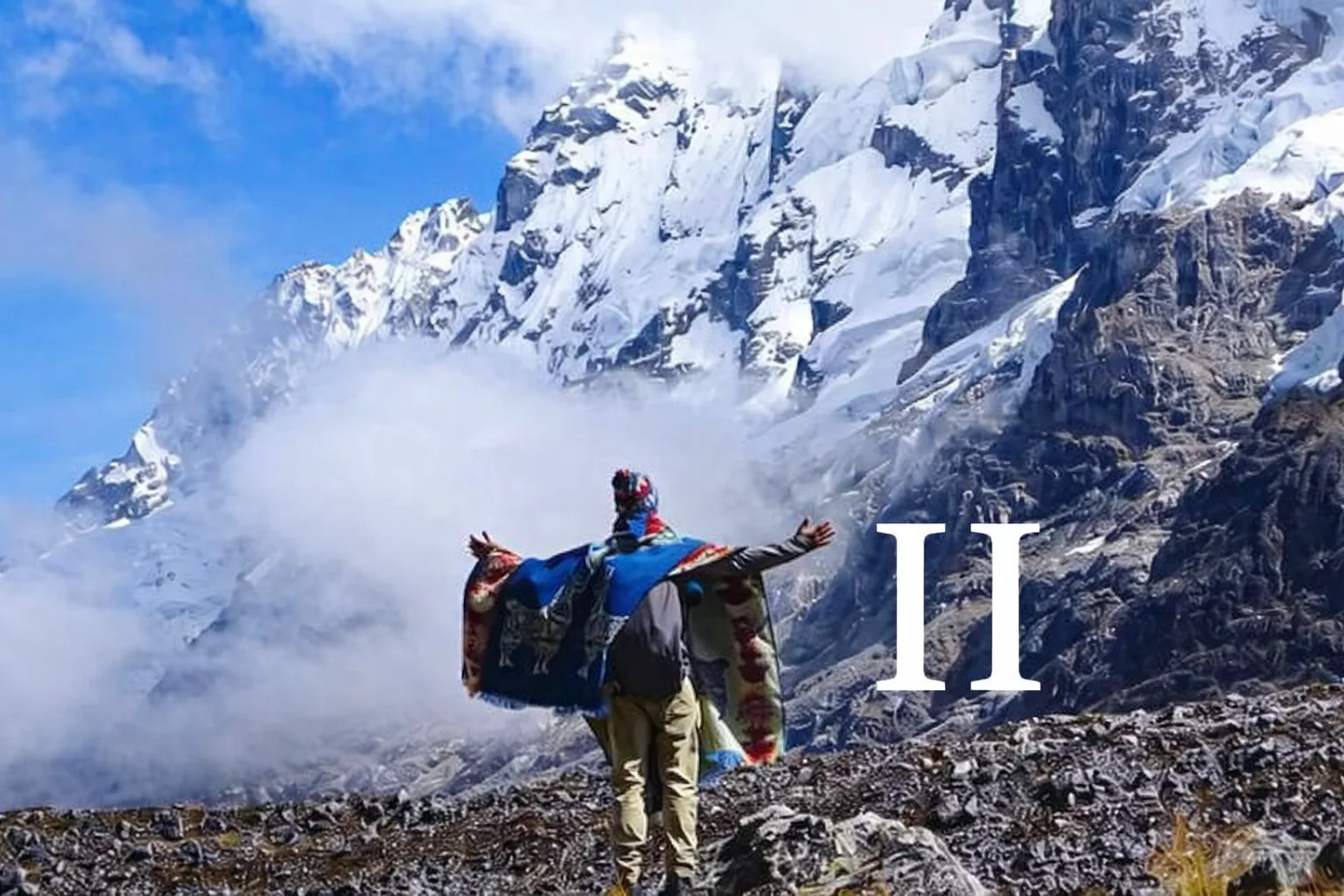
After crossing the high alpine world of Salkantay, the character of the Andes shifts rapidly. Ice gives way to humidity, exposed slopes transition into dense vegetation, and silence is gradually replaced by movement, insects, and birdsong.
This descent is not simply easier terrain. It represents one of the fastest ecological transitions found on any major trekking route in the world. Within a matter of days, travelers move from near-glacial environments into the upper edges of the Amazon basin.
Understanding this section of the trek requires noticing how life returns, layer by layer, as altitude decreases and moisture increases.
The Cloud Forest Environment
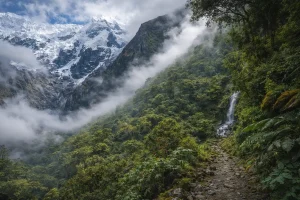
Between roughly 3,000 and 1,800 meters above sea level, the Salkantay route enters the Andean cloud forest. Here, persistent mist traps humidity against mountain slopes, creating ideal conditions for biodiversity.
Unlike the sparse puna ecosystem above, growth becomes vertical and abundant. Plants compete for light rather than survival. Trees host other plants, rivers gain strength, and agriculture reappears as communities adapt to warmer microclimates.
This is where the Andes reconnect with the jungle.
9 Things to Notice Along the Descent
These observations reveal how geography, biodiversity, and human presence evolve as the mountains transition toward the Amazon.
I. Flora & Fauna — The Return of Biodiversity
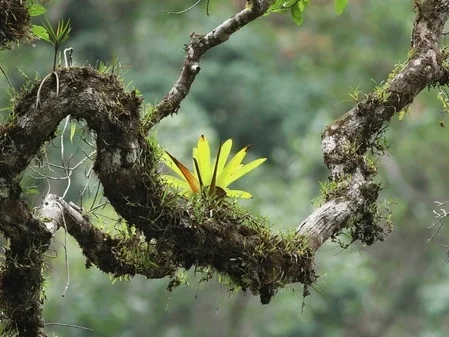
1. Bromeliads and Epiphytes
Many plants in the cloud forest no longer grow from soil. Bromeliads and mosses attach themselves directly to tree branches, absorbing moisture from the air. Entire miniature ecosystems develop above ground level, turning trees into living habitats.
2. Orchids of the Cloud Forest
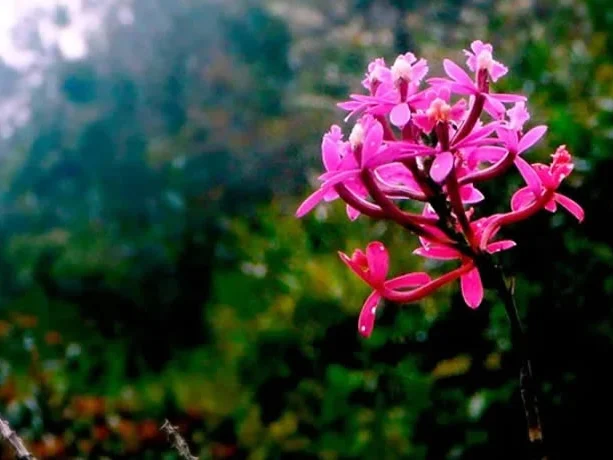
The eastern Andes of Peru contain one of the highest orchid diversities on Earth. Along humid sections of the trail, small flowering species appear on trunks, rocks, and shaded slopes, often unnoticed unless travelers slow their pace.
Their presence signals stable humidity and ecological richness.
3. Cock-of-the-Rock Habitat Zones
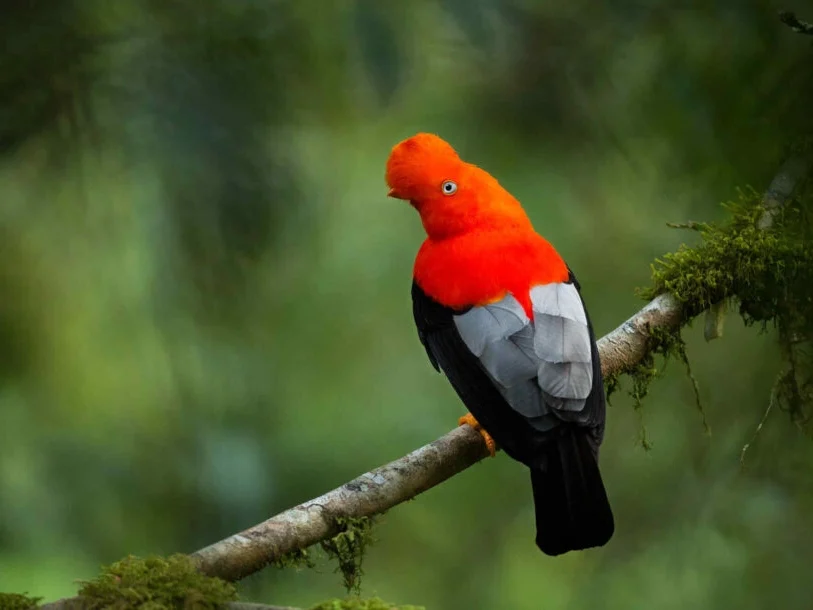
Dense forest corridors along the descent provide habitat for Peru’s national bird, the Andean Cock-of-the-rock. Though sightings are never guaranteed, guides often recognize areas where males gather during mating displays deep within the forest canopy.
II. Geography — When Water Shapes the Landscape
4. Cloud Forest Mist Layers
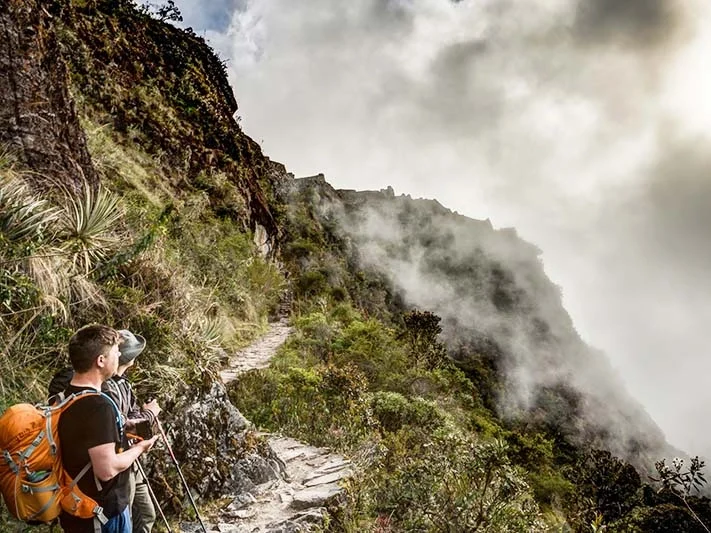
Low-moving clouds frequently drift across valleys, creating alternating visibility throughout the day. These mist bands regulate temperature and moisture, allowing tropical biodiversity to exist at surprisingly high elevations.
The forest here grows because clouds remain trapped against the mountains.
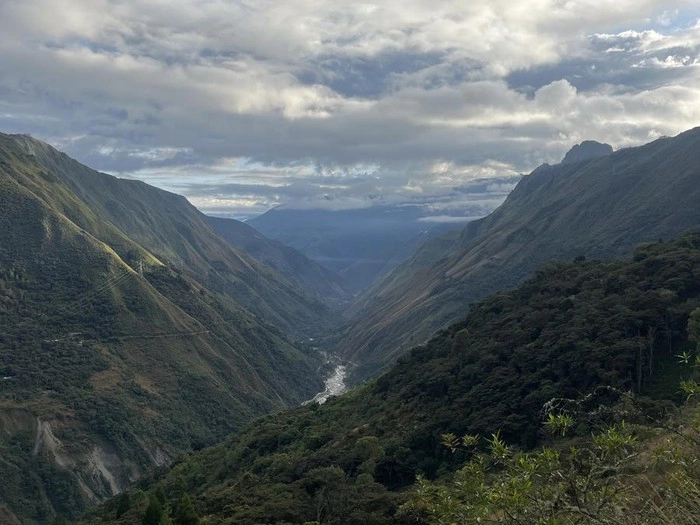
5. River-Carved Canyons
Unlike the glacial valleys of the upper Andes, terrain in this section is shaped primarily by flowing water. Rivers cut steep channels through vegetation, accelerating erosion and feeding larger Amazonian systems downstream.
Water replaces ice as the dominant geological force.
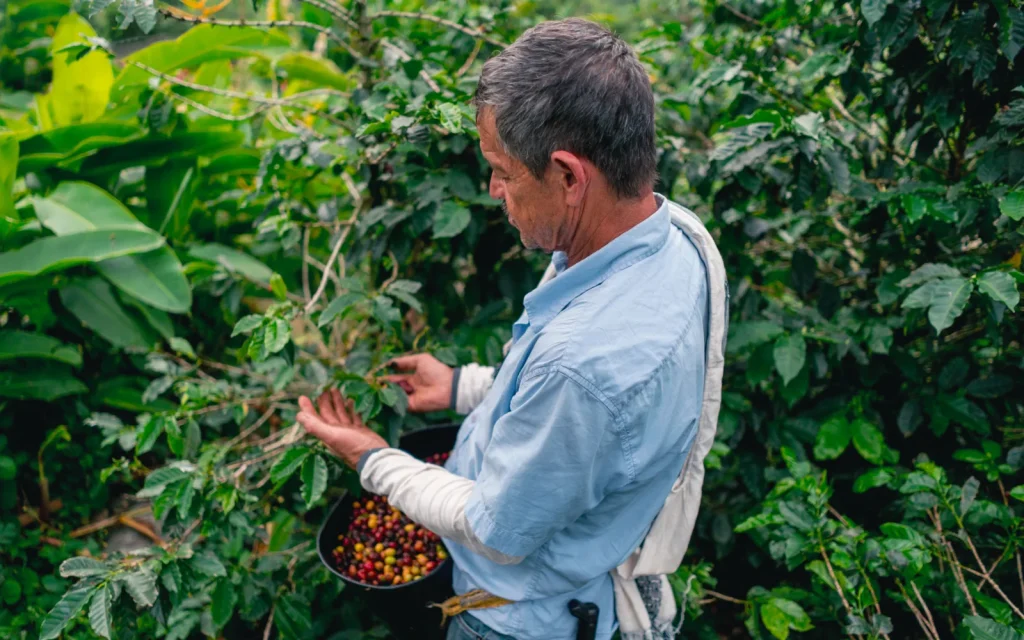
6. Coffee and Fruit Microclimates
As temperatures stabilize, agriculture returns to the landscape. Hillsides surrounding areas like Colpapampa support coffee plantations, bananas, avocados, and citrus crops, examples of how Andean communities adapt farming practices to elevation-specific climates.
III. Cultural Landscape — Living Routes of the Andes
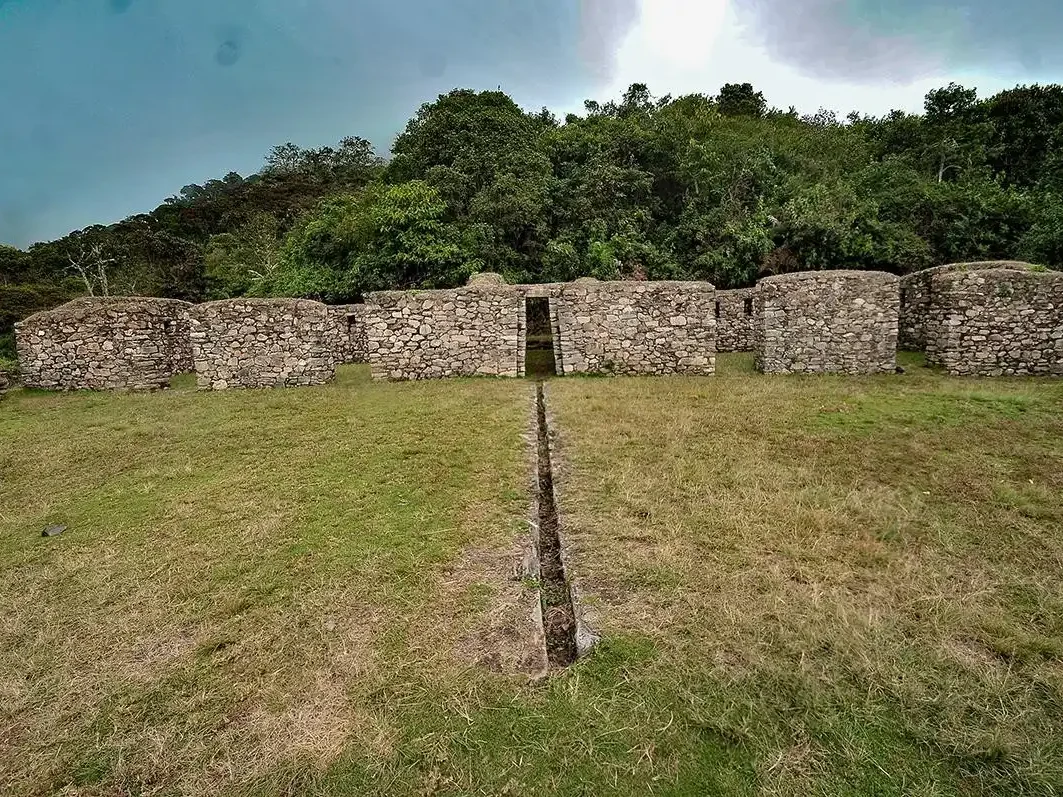
7. Hidden Llactas
Scattered remains of small settlements, or llactas, occasionally appear along secondary paths and agricultural zones. These sites reflect long-standing movement corridors linking highland and jungle regions well before modern trekking routes existed.
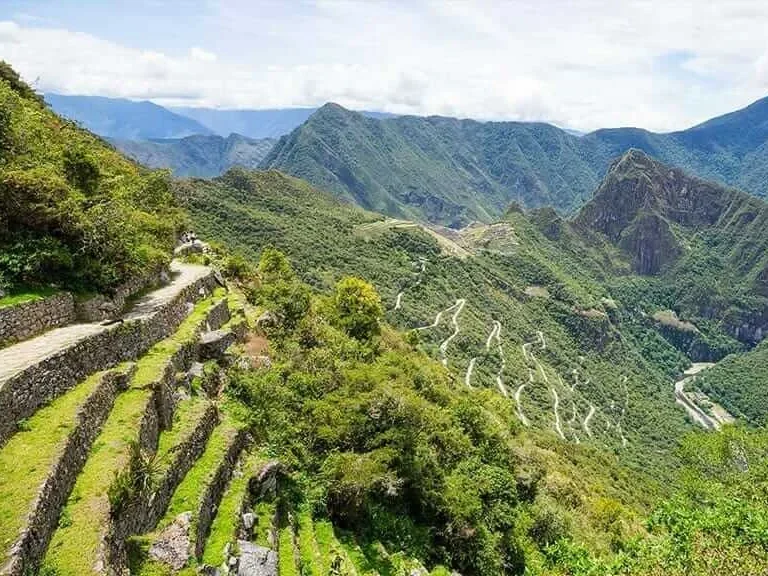
8. Ancient Agricultural Terraces
Stone terraces integrated into steep slopes demonstrate sophisticated vertical farming systems developed to prevent erosion and maximize production across changing climates. Many continue influencing local agriculture today.
9. Living Mountain Communities
Unlike the remote alpine section, this part of the trek passes through actively inhabited valleys. Families cultivate land, transport goods along mountain roads, and maintain cultural continuity with earlier Andean travel networks.
Here, the trek intersects daily life rather than isolation.
✔ Cloud Forest Observation Checklist
| What to Notice | Where You’re Most Likely to See It | What Makes It Interesting | □ |
| Bromeliads & Epiphytes | Attached to tree branches along humid trail sections after the high pass | These plants grow without soil, collecting water directly from mist and rainfall. Entire ecosystems exist above ground level. | □ |
| Wild Orchids | Shaded forest areas and moss-covered trunks during descent | Many species bloom unnoticed by trekkers rushing downhill. Peru hosts thousands of orchid varieties adapted to microclimates. | □ |
| Cock-of-the-Rock Habitat Zones | Dense forest corridors near river valleys | Males perform group mating displays at dawn, making these forests one of the most biologically active zones of the trek. | □ |
| Cloud & Mist Layers | Early mornings and late afternoons in narrow valleys | The forest survives because clouds remain trapped against the mountains, creating permanent humidity. | □ |
| River-Carved Canyons | Sections where the trail follows strong rivers or waterfalls | Unlike the upper Andes shaped by ice, this terrain is actively sculpted by flowing water. | □ |
| Coffee Plantations | Around settlements near Colpapampa and lower valleys | Coffee grown here benefits from altitude, shade, and volcanic soils — conditions prized worldwide. | □ |
| Hidden Llactas | Near agricultural clearings or secondary paths | These small settlements connected ancient trade routes between highlands and jungle regions. | □ |
| Agricultural Terraces | Hillsides surrounding inhabited valleys | Terrace farming prevents erosion while creating usable farmland on steep mountain slopes. | □ |
| Living Mountain Communities | Villages encountered along the trail | These routes were functioning travel corridors long before trekking tourism existed. | □ |
Why the Descent Matters
Many travelers remember the Salkantay Pass as the physical highlight of the trek. Yet the descent often becomes its ecological revelation.
Within a single journey, travelers witness how altitude governs life, from glacier-fed silence to forest abundance. The transition explains why the Andes function not as a barrier, but as a bridge between worlds.
By the time the trail approaches Machu Picchu, the experience already carries deeper context: a gradual understanding of how landscapes, cultures, and ecosystems remain connected across elevation.
Learn more about this blog series here.