Pisac Ruins Guide: Understanding One of the Sacred Valley’s Most Complex Archaeological Sites
Pisac Beyond the Market Stop
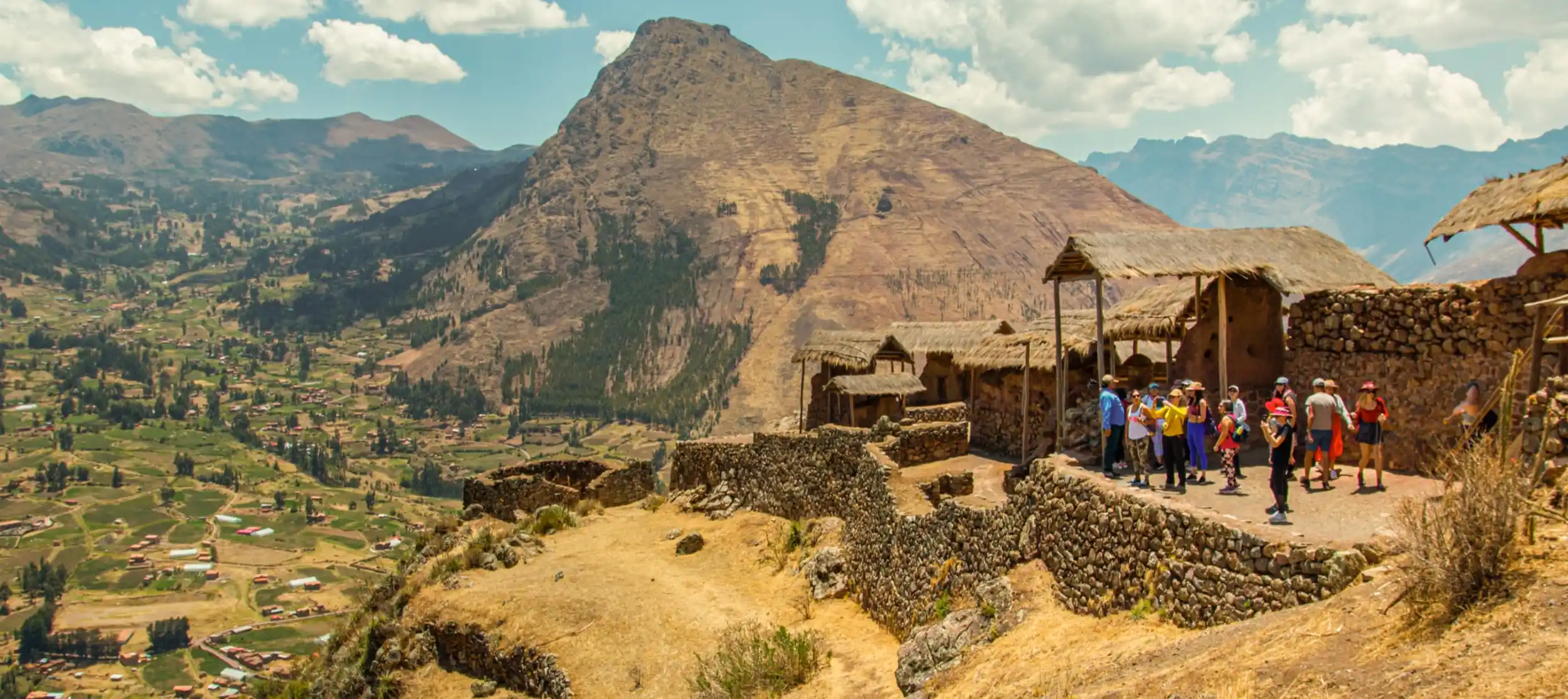
Most itineraries treat Pisac as a short stop, usually split between the artisan market and a quick visit to the ruins.
This approach misses the core value of the site. Pisac is not a secondary attraction. It is one of the most complete examples of integrated Inca planning, combining agriculture, urban design, religion, and defense into a single mountain-scale system.
Understanding Pisac requires moving beyond isolated viewpoints and reading it as a connected structure.
The Structure of Pisac, A Multi-Zone System
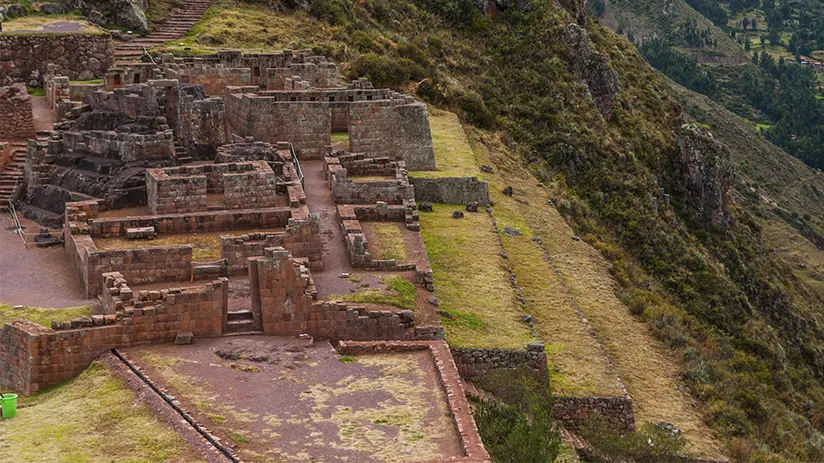
Pisac is not organized as a single complex. It is distributed across the mountain in clearly defined sectors, each serving a specific function.
These include:
- Agricultural terraces
- Residential zones
- Ceremonial spaces
- Defensive structures
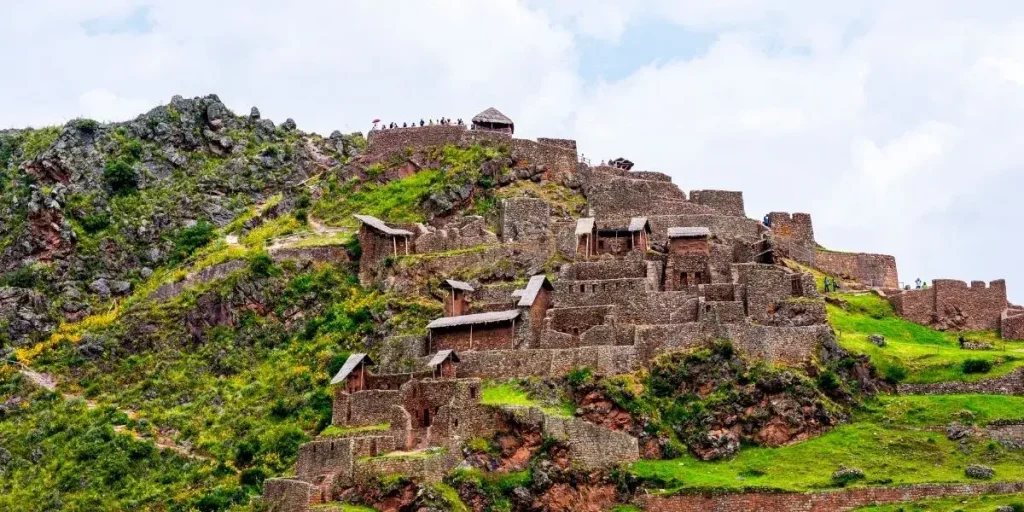
What defines the layout is elevation. Each level of the mountain corresponds to a different operational role, creating a vertical system rather than a flat settlement.
Agricultural Terraces, Engineering at Scale
The terraces of Pisac are among the most extensive in the Sacred Valley. They wrap around the mountain in continuous layers, forming both a productive and structural system.
Their function goes beyond cultivation:
- Soil retention and erosion control
- Water management through irrigation channels
- Creation of microclimates for different crops
These terraces demonstrate that Inca agriculture was not adaptive, it was engineered at landscape scale.
The Urban Sector, A Functional Settlement
Beyond agriculture, Pisac includes a defined residential component.
This area contains:
- Housing compounds
- Storage units (collcas)
- Internal pathways connecting sectors
This transforms Pisac from a symbolic site into a working settlement, where daily life and large-scale production were integrated.
Ceremonial Sector, The Intihuatana
At the highest elevations sits the ceremonial core, including the Intihuatana (sun temple).
This sector is defined by:
- Precisely carved stone structures
- Alignment with solar cycles
- Elevated positioning above the valley
The placement is intentional. Religious structures occupy the highest ground, reinforcing symbolic control over the landscape.
Defensive Features, Control Through Positioning
Pisac’s location is not accidental. Its elevation and layout provide clear defensive advantages:
- Visibility across the valley
- Controlled access points
- Natural barriers through steep terrain
This suggests a dual function:
- Administrative and agricultural center
- Strategic control point within the Sacred Valley
Why Most Visits Fall Short
The majority of visitors do not experience Pisac as a complete system.
Common limitations include:
- Spending more time in the market than the ruins
- Visiting only upper viewpoints or lower terraces
- Moving quickly between stops without understanding connections
The result is partial exposure. The site is seen, but not fully understood.
How to Properly Explore Pisac
The route you choose directly affects how you interpret the site.
Top-Down Route
- Start from the upper entrance
- Move from ceremonial → residential → agricultural sectors
Advantage:
Follows the logic of the site’s structure, making it easier to understand how each part connects
Bottom-Up Route
- Begin in the town of Pisac
- Hike up through terraces toward the upper sectors
Advantage:
Stronger physical immersion, but more demanding and less structured
Time Allocation
- Minimum: 2–3 hours
- Ideal: Half-day for full coverage
Pisac Within the Sacred Valley System
Pisac plays a defined role within the broader valley network.
- It functions as the eastern gateway to the Sacred Valley
- Controls movement between highlands and valley floor
- Complements other sites such as:
- Ollantaytambo (urban + military structure)
- Moray (agricultural experimentation)
Each site represents a different aspect of Inca planning. Pisac integrates several of them into a single location.
Integrating Pisac Into a More Efficient Route
Traditional Sacred Valley tours treat Pisac as a short stop before moving on. This creates a fragmented experience.
A more effective approach is to integrate Pisac into a continuous route across the valley, where movement between sites is part of the experience rather than a transition.
Active exploration, such as ATV-based routes, allows for:
- Better pacing between locations
- Access to varied terrain
- A more connected understanding of the valley
Who Should Spend More Time in Pisac
Pisac is particularly valuable for travelers who:
- Want more than surface-level archaeological visits
- Prefer structured exploration over quick stops
- Have at least one full day in the Sacred Valley
For these travelers, Pisac shifts from optional to essential.
Pisac as a System, Not a Stop
Pisac is often positioned as a secondary destination. In reality, it is one of the most complete representations of how the Incas designed and organized space.
Its value lies not in any single structure, but in how its components interact.
When approached with time and structure, Pisac becomes more than a viewpoint, it becomes a full-scale archaeological system that defines the eastern edge of the Sacred Valley.