The Apus of Cusco and the Salkantay Trek: Understanding the Sacred Path to Machu Picchu
Understanding the Apus: More Than Mountains
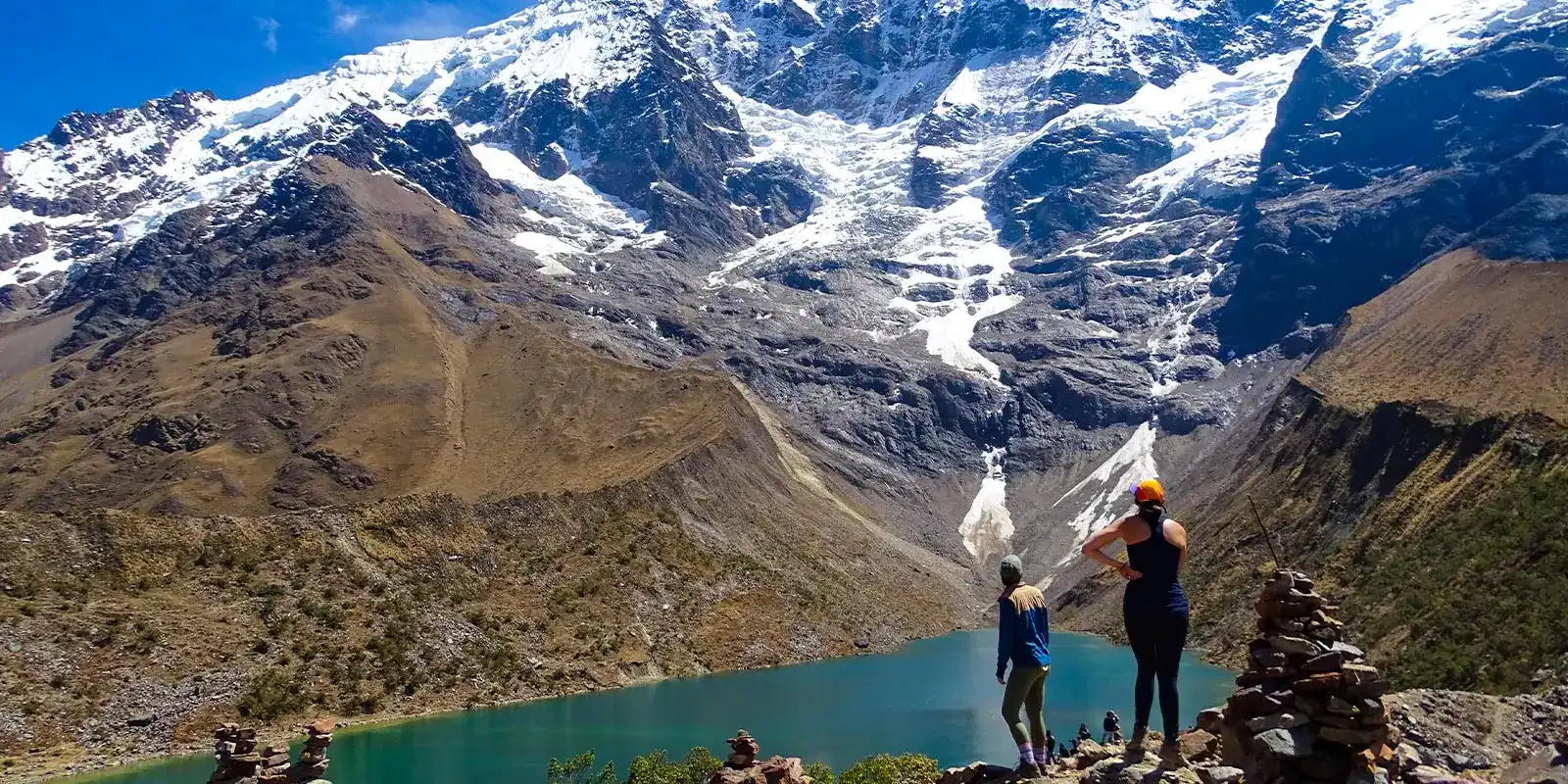
In the Andes, mountains are not landscape features, they are active entities within a living system. Known as Apus, these peaks are understood as protectors, providers, and intermediaries between the natural and spiritual worlds. Their presence shapes not only the geography of Cusco, but also the way people relate to land, weather, and movement.
This is not a symbolic layer added after the fact. The Apus remain embedded in daily life through rituals, agricultural practices, and decision-making. Offerings to the earth, pagos, are still performed to maintain balance, reinforcing a principle that defines Andean thought: reciprocity.
Understanding this system changes how you perceive routes through the Andes. What might appear as a trekking network is, in practice, a sacred geography with structure and meaning.
Cusco as a Sacred Landscape
Cusco is not surrounded by mountains, it is organized by them. Each major peak holds a role within a broader hierarchy of Apus, influencing specific territories and communities.
Among the most significant:
- Ausangate: the highest in the region, closely tied to water sources and agricultural cycles
- Salkantay: associated with strength, protection, and transition across regions
- Veronica: a visible reference point from the Sacred Valley, embedded in local identity
- Pitusiray: connected to origin stories and ancestral narratives
Together, they form a network of influence, where geography and belief are inseparable. Movement through this region: whether for trade, pilgrimage, or trekking. Historically, is defined as movement through a structured, inhabited landscape.
Why the Apus Still Matter
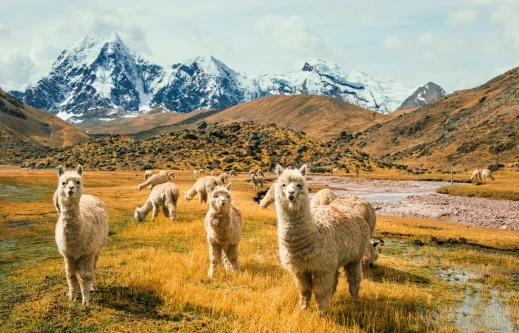
The relevance of the Apus is not historical, it is ongoing. Communities across the Andes continue to engage with them through ayni, a system of reciprocity that governs the relationship between humans and the natural world.
Offerings typically include coca leaves, food, and chicha, presented with intention rather than ritual formality. These acts are practical exchanges that sustain balance.
Specialists known as paqos act as intermediaries, but the relationship is not exclusive to them. Farmers, guides, and families maintain their own forms of connection, particularly in moments of uncertainty: weather shifts, harvest cycles, or journeys across high-altitude terrain.
From this perspective, crossing a mountain pass is not neutral. It is an interaction with a presence.
Salkantay: The Defining Apu on the Route to Machu Picchu
Among the Apus of Cusco, Salkantay holds a distinct position. Rising above 6,200 meters, it dominates the landscape west of Cusco and marks a transition zone between the high Andes and the cloud forest that leads toward Machu Picchu.
Its name is often interpreted as “wild” or “unconquered”. It is a reflection of both its physical presence and its cultural role. For those moving through this corridor, it represents a threshold.
This becomes particularly relevant in the context of the Salkantay Trek. Because, the route is defined by proximity to this Apu.
The Salkantay Trek: A Different Kind of Route
The Salkantay Trek is often positioned as an alternative to the Inca Trail. In practice, it operates under a different logic.
Where the Inca Trail builds a narrative through archaeological sites, the Salkantay finds its structure around environmental and spiritual transitions. It moves from glacial terrain to subtropical forest in a matter of days, crossing ecological layers that historically represented distinct worlds.
This shift reframes the experience. The trek is not a sequence of checkpoints, it is a continuous passage through changing conditions, with Salkantay at its center.
Crossing Salkantay Pass: The Core Moment
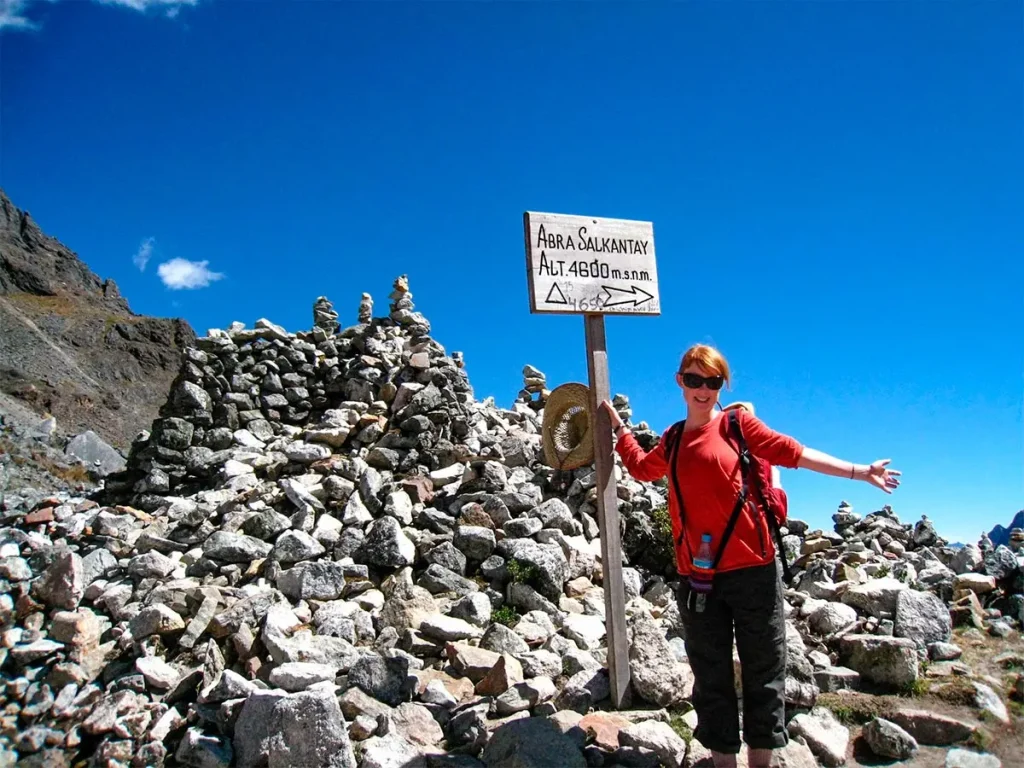
At approximately 4,600 meters, the Salkantay Pass is the highest and most demanding point of the trek. The environment’s highlight here is: exposure,wind, cold, and thin air. All combined with a near-constant visual presence of the glacier above.
From a physical standpoint, it is the main challenge. From a cultural standpoint, it is the most significant point of contact with the Apu.
It is common for guides to pause before the crossing, offering coca leaves or taking a moment of acknowledgment. These actions are not performative; they reflect an understanding that this section of the route carries weight beyond difficulty.
This is where the trek shifts. What begins as a logistical progression becomes, for many, a defined moment within the journey.
Descent and Transition Toward Machu Picchu
After the pass, the landscape changes quickly. Glacial terrain gives way to green valleys, then to dense vegetation as the route approaches the cloud forest.
This descent is more than visual variation. Within Andean cosmology, it represents movement between ecological layers that have long been understood as distinct yet connected domains.
In this sense, Salkantay functions as a gateway. The path toward Machu Picchu is not direct—it is mediated through transformation.
Positioning the Experience
Experiencing this route requires managing altitude, recovery, and environmental shifts. The way these elements are handled directly affects how the journey is perceived.
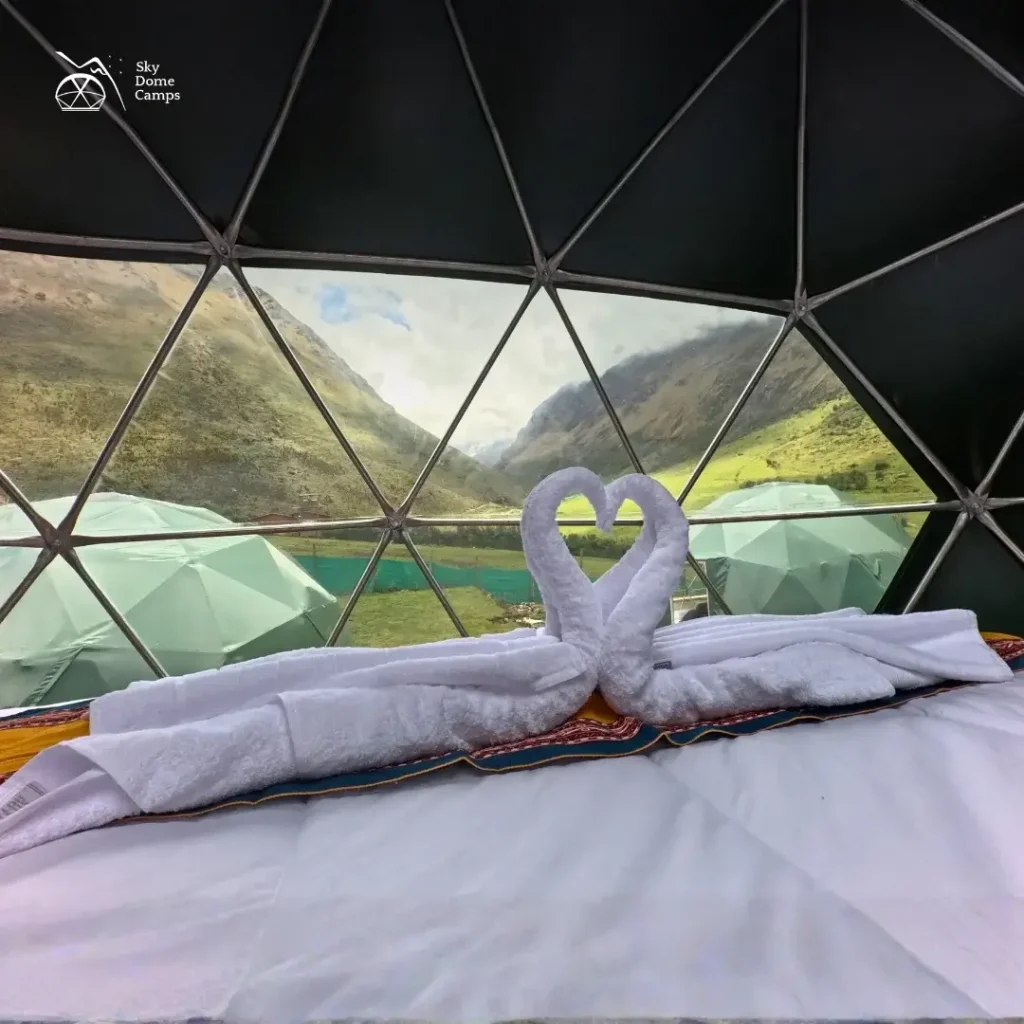
Well-designed camps, such as SkyDomes, do not alter the landscape or its meaning. They stabilize the experience, allowing for proper rest, acclimatization, and sustained engagement with the surroundings.
This becomes particularly relevant on a route where the key moments, like crossing Salkantay Pass, depend as much on physical condition as on context.
Reframing the Journey to Machu Picchu
Approaching Machu Picchu through the Salkantay route changes the narrative. The destination remains the same, but the process leading to it is fundamentally different.
The Apus, especially Salkantay, are not background elements. They define the structure of the journey, shaping both its challenges and its meaning.
Seen this way, the trek is not simply a way to reach Machu Picchu. It is a contextual path through a living landscape, where movement, environment, and belief remain interconnected.