Camping vs Glamping vs 3-Star Dome: What’s the Real Difference?
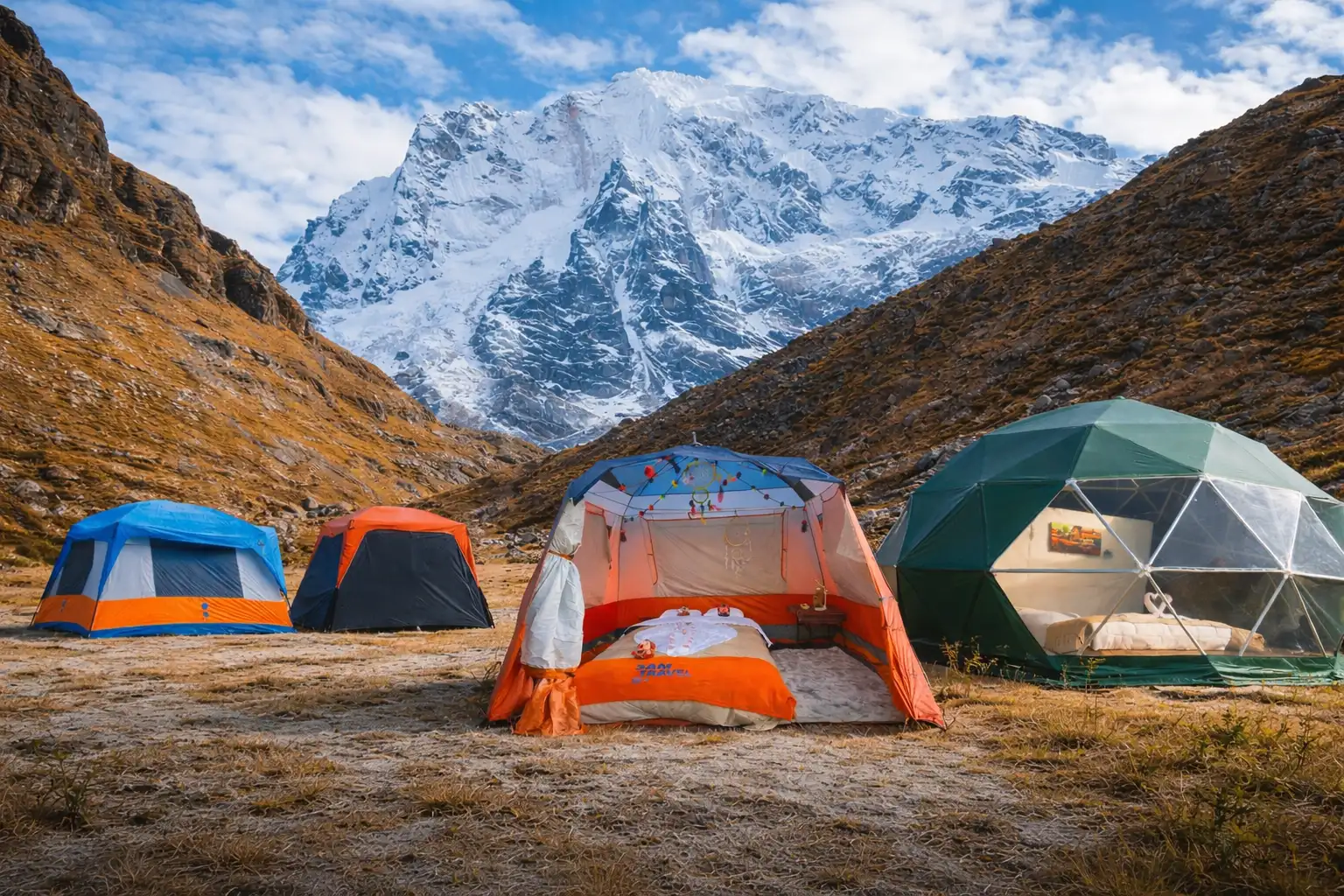
On routes like the Salkantay Trek and the Choquequirao Trek, you’ll see three terms used constantly: camping, glamping, and luxury domes.
They’re often treated as interchangeable. They are not. Each option represents a different infrastructure level, a different recovery standard, and ultimately a different experience on the mountain.
If you’re planning a multi-day Andean trek, understanding these differences is not cosmetic, it directly affects how you will feel on day three, day four, and when you finally arrive at Machu Picchu.
Let’s break it down clearly.
1. Traditional Trekking Camping
This is the classic expedition format.
- Two-person temporary tents
- Sleeping pads or basic mattresses
- Shared bathroom facilities (sometimes minimal)
- Portable dining tents
- Early setup and breakdown logistics
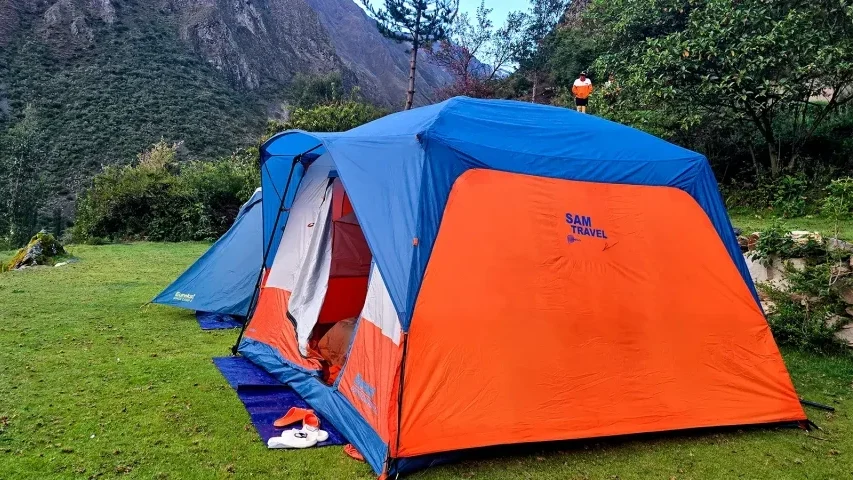
Camping prioritizes mobility and simplicity. It works well for trekkers who value a raw, expedition-style atmosphere and don’t mind limited infrastructure.
But it is important to understand what it means physically.
After crossing 4,000+ meters, your body is fatigued. Sleep quality depends heavily on insulation, terrain stability, and weather exposure. Recovery is passive, as you rest because you stop moving, not because the environment is designed to help you recover.
For many travelers, that’s part of the adventure. For others, it becomes the hardest part of the trek.
2. Glamping on a Mountain Trail
“Glamping” is a broad term. On Andean trekking routes, it usually means an upgraded camping structure.
Typical features include:
- Larger canvas tents or domes
- Proper mattresses instead of pads
- Improved dining setups
- More spacious interiors
- Occasionally decorative touches
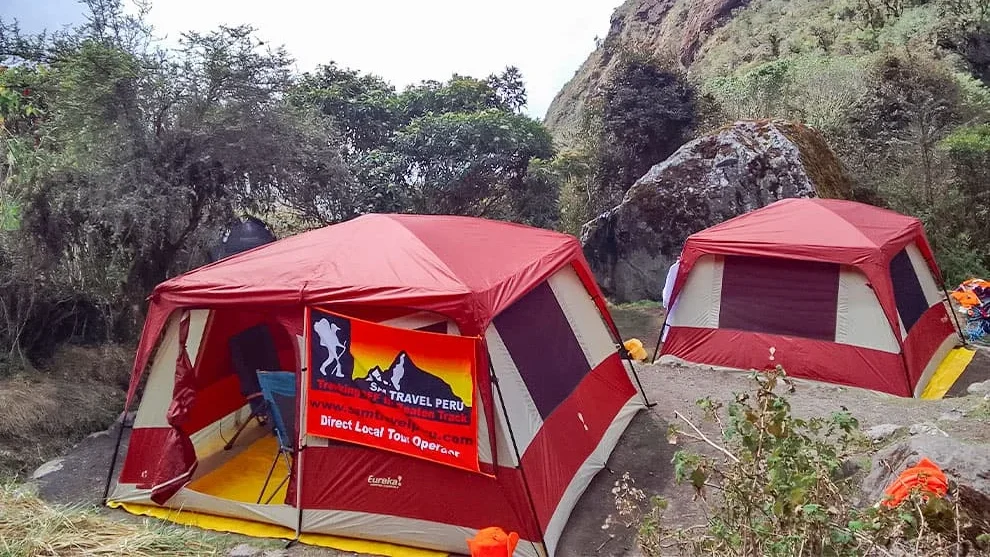
Glamping improves comfort, but it often retains semi-temporary infrastructure. Bathrooms may still be shared. Insulation varies. Structural engineering is not always permanent.
In other words, glamping enhances the camping experience, but it doesn’t necessarily redefine the accommodation standard.
For many trekkers, this is a balanced middle ground.
3. What a 3-Star Dome Standard Actually Means
A 3-star dome is not about decoration. It is about infrastructure.
At Sky Dome Camps, the internal benchmark is simple:
Deliver the equivalent comfort of a 3-star hotel room, on a mountain route.
That translates into:
- Permanent, engineered geodesic dome structures
- Thermal insulation adapted to high-altitude climate variation
- Full-size, hotel-style beds
- Private en-suite bathrooms
- Stable lighting and energy systems
- Structured dining operations
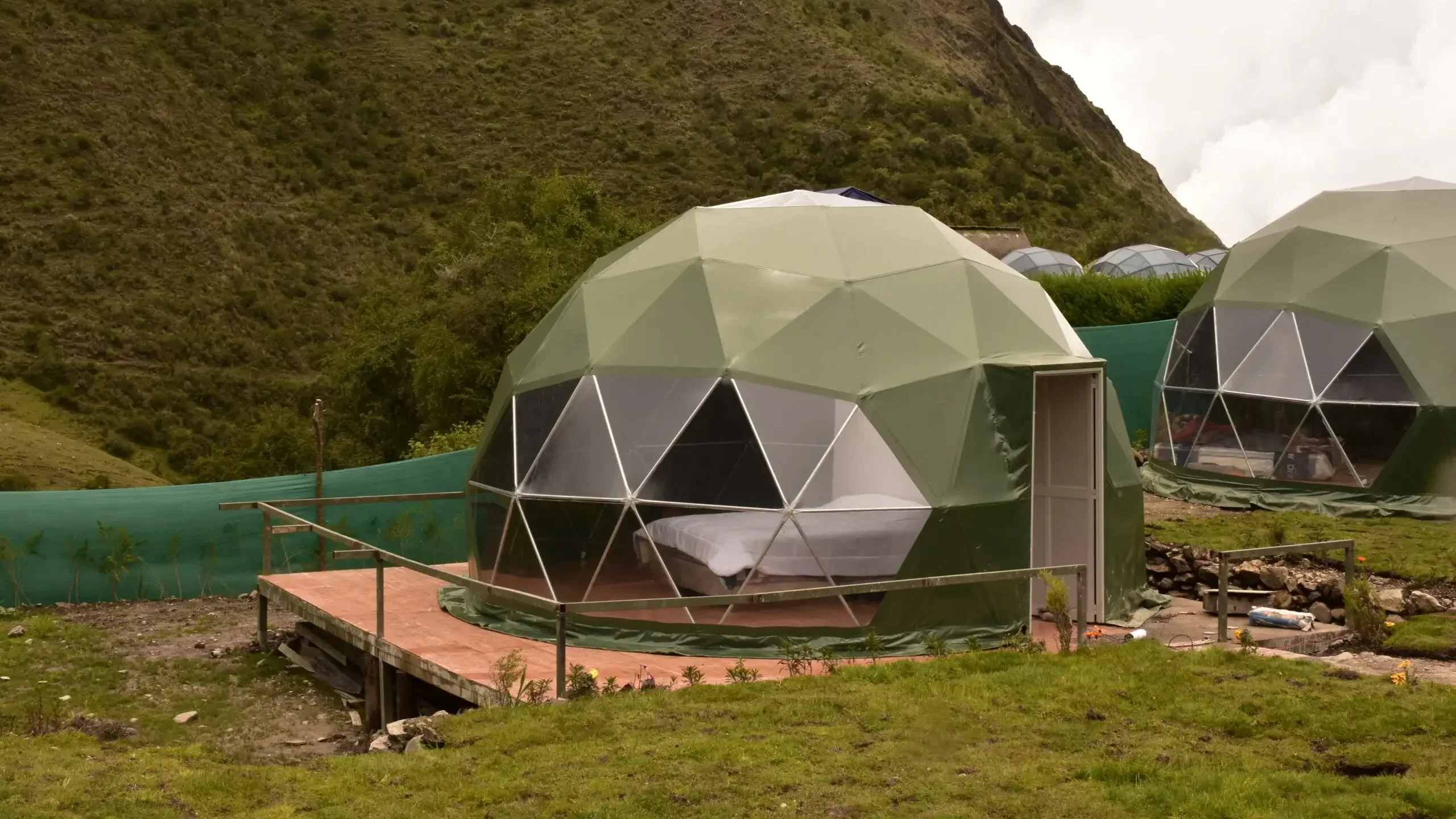
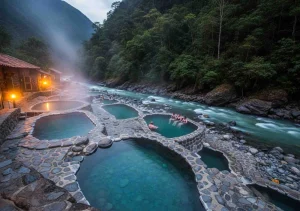
At flagship locations like Colpapampa, recovery goes further with integrated jacuzzi and sauna facilities. This introduces active thermal recovery into a trekking environment.
This is not a comfort upgrade layered onto camping. It is a different operational category.
4. Side-by-Side Comparison
Here is how the three formats compare in practical terms:
| Feature | Traditional Camping | Glamping | 3-Star Dome Standard |
| Structure Type | Temporary tent | Large canvas tent or dome | Engineered insulated dome |
| Bathroom | Shared / basic | Shared or limited private | Fully private en-suite |
| Bed System | Sleeping pad | Mattress | Full-size hotel-style bed |
| Weather Protection | Minimal insulation | Moderate | Thermal insulation system |
| Dining Setup | Expedition tent | Upgraded dining tent | Structured dining infrastructure |
| Recovery Focus | Shelter only | Comfort upgrade | Designed for physiological recovery |
| Wet Areas | No | Rare | Jacuzzi & Sauna (select camps) |
| Best For | Expedition purists | Comfort-focused trekkers | Performance-driven hikers |
5. The Real Difference: Recovery
On demanding treks like Salkantay or Choquequirao, the question is not “Do I want luxury?”
The real question is:
How important is recovery to me?
At high altitude, the body is managing:
- Reduced oxygen availability
- Muscular fatigue from steep ascents and descents
- Temperature fluctuations
- Accumulated multi-day strain
Sleep quality, warmth stability, and muscle relaxation directly influence how strong you feel the next morning.
- Camping offers shelter.
- Glamping offers enhanced comfort.
- A 3-star dome is designed around recovery performance.
That difference becomes noticeable by the third day of a demanding route.
6. Which Option Should You Choose?
There is no universal answer, only alignment with your priorities.
Traditional camping if:
- You want a pure expedition feel.
- Infrastructure level is not important to you.
- You value simplicity over comfort.
Glamping if:
- You want better rest without changing the trekking dynamic.
- Shared facilities are acceptable.
- You prefer moderate comfort upgrades.
3-star dome if:
- You see recovery as part of performance.
- You want privacy and structured infrastructure.
- You are combining demanding routes like Choquequirao or Salkantay before reaching Machu Picchu.
- You want to arrive at the final stage feeling strong, not depleted.
Booking a dome is not about adding luxury. It is about choosing how you want to experience the mountain.
Final Takeaway
On a multi-day Andean trek, the days define the adventure, but the nights define how you feel about it.
The accommodation you choose shapes your recovery, your energy, and your final arrival. And when the route is demanding, the difference between shelter and structure becomes very real.