Beyond Salkantay: 3 High-Altitude Experiences That Match Its Spirit
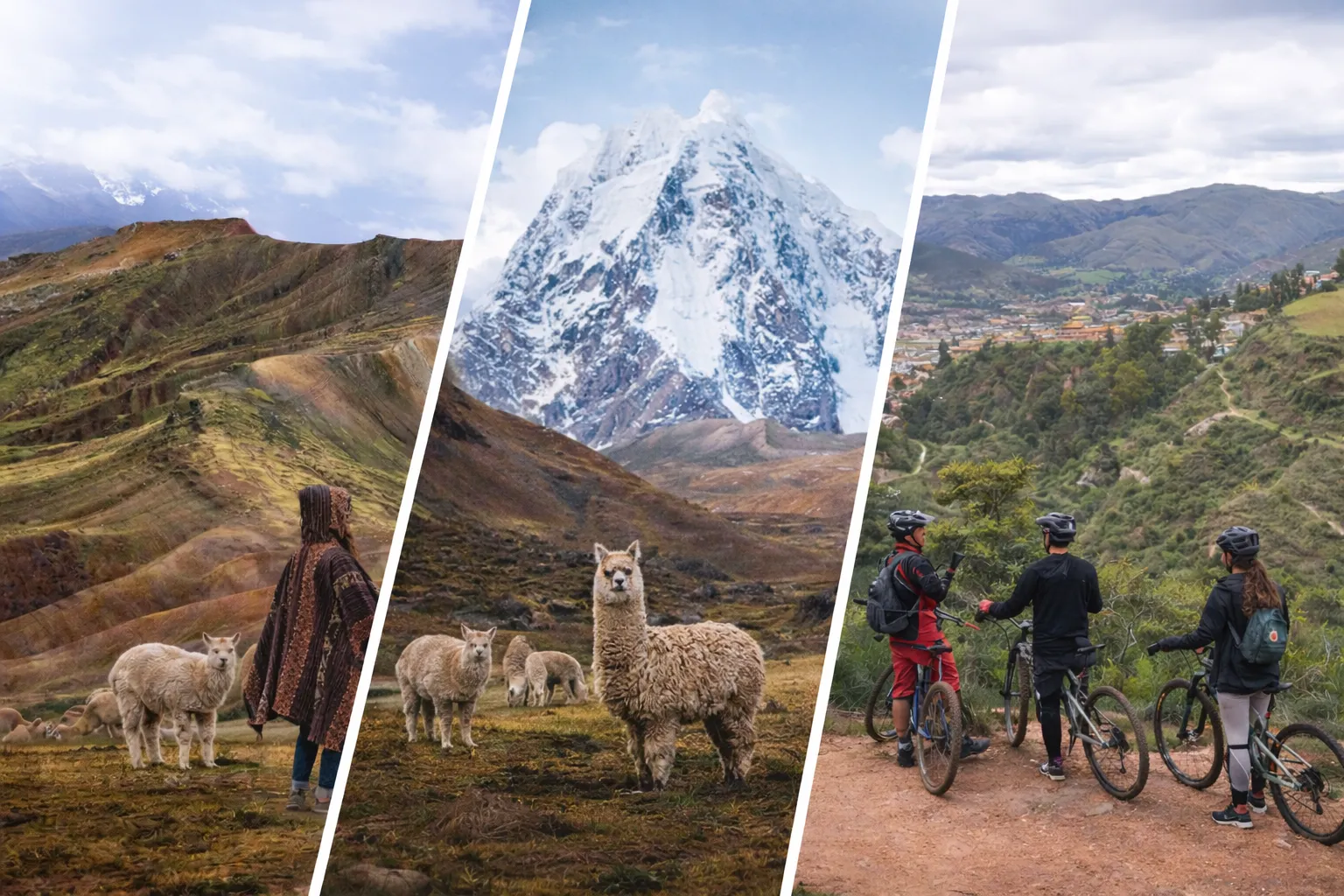
Choosing the Salkantay Trek is rarely accidental. Travelers who select this route over more regulated or crowded alternatives are signaling something specific: a preference for altitude exposure, physical continuity, and landscape scale over structured archaeological circuits.
That decision creates a profile, and not every post-trek experience aligns with it.
If Salkantay worked for you, the following three high-altitude experiences maintain the same terrain logic: exposure, remoteness, and intentional movement. Without diluting the identity of the journey.
What the Salkantay Decision Signals
Opting for Salkantay typically reflects:
- Comfort operating above 4,000m
- Preference for open mountain corridors over dense site sequencing
- Lower tolerance for high-traffic routes
- Interest in environmental immersion rather than guided monument pacing
- Physical confidence across multi-day efforts
The goal after Salkantay is not accumulation, it is continuity.
These three experiences preserve that coherence:
1) Ausangate Trek — Escalation of Isolation
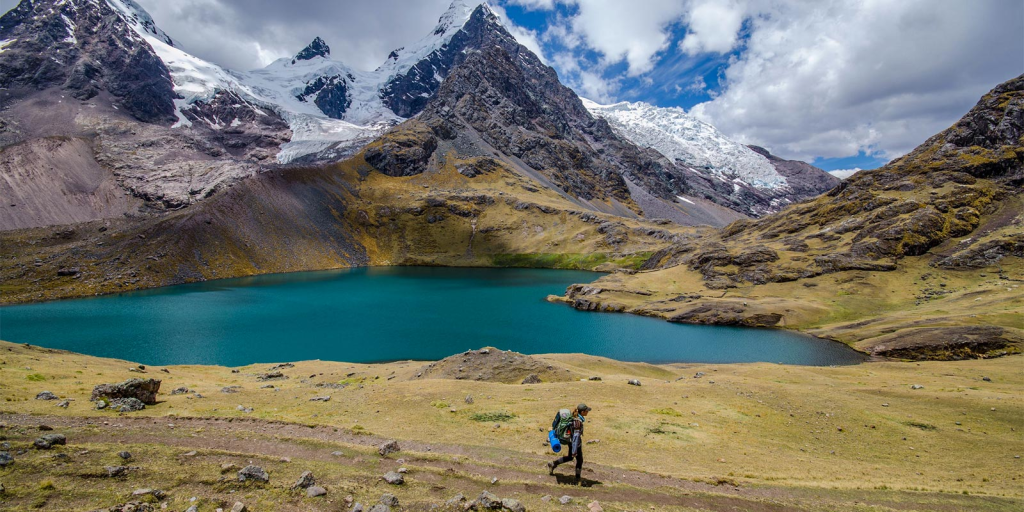
If Salkantay is a scenic high-altitude corridor, Ausangate is a circular immersion.
The Ausangate Trek sustains higher average elevations and operates with significantly less infrastructure. Campsites are more exposed. Services are lighter. The cultural interface shifts toward Andean pastoral communities rather than transit villages.
Key distinctions:
- Higher sustained altitude profile
- Greater remoteness
- Minimal fixed-route traffic
- Stronger ecological and cultural continuity
Where Salkantay balances accessibility with alpine exposure, Ausangate prioritizes isolation and environmental scale.
For travelers who finished Salkantay wanting “more mountain, less corridor,” this is a logical progression.
2) Palccoyo Rainbow Mountain — Controlled Remoteness
Palccoyo operates differently.
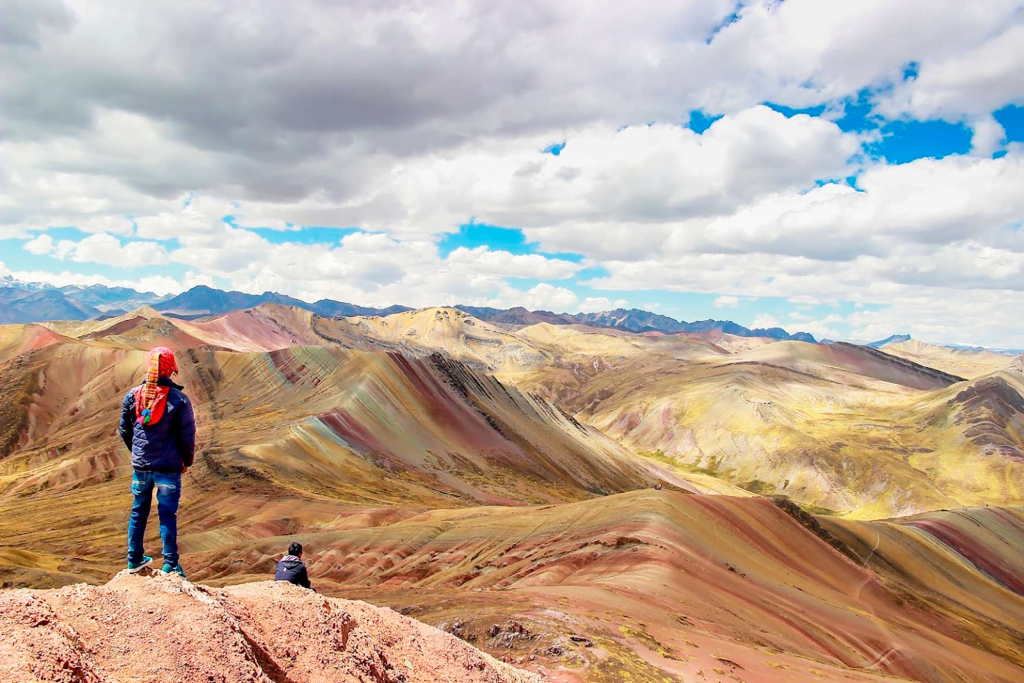
It is shorter, more compact, and logistically efficient. Yet, it maintains high-altitude terrain above 4,500m. Unlike the more concentrated Rainbow Mountain circuits, Palccoyo distributes visitors across a broader landscape.
This makes it attractive to Salkantay-profile travelers who value:
- Geological scale
- Reduced density
- Direct exposure to Andean highlands
- Short-duration, high-elevation access
Salkantay delivers multi-day immersion, Palccoyo delivers concentrated altitude exposure.
3) Sacred Valley E-Biking — Kinetic Access to Cultural Terrain
Not every extension needs to increase altitude, some should shift modality.
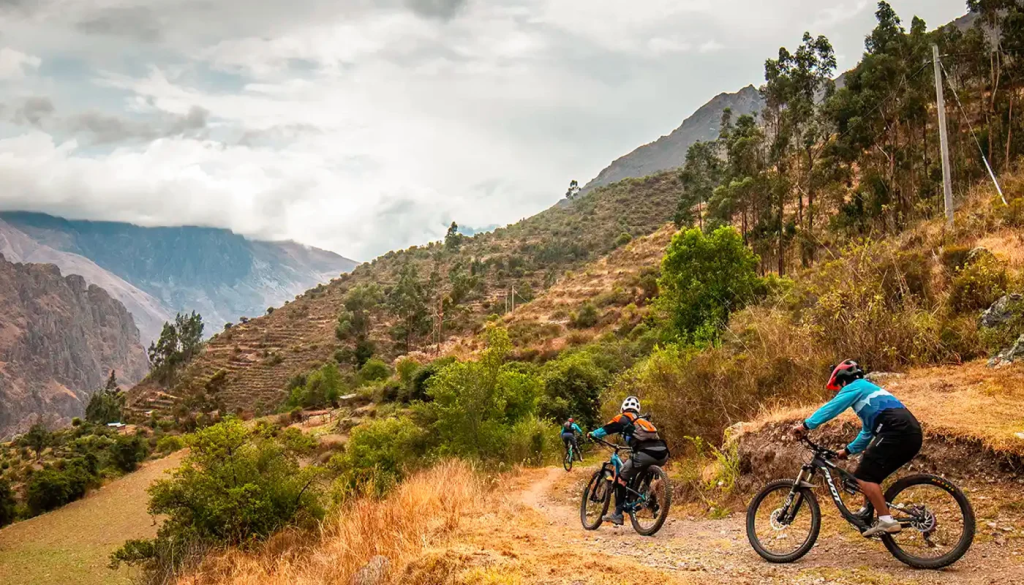
An e-bike circuit through the Sacred Valley preserves physical engagement while introducing archaeological density without reverting to bus-based touring.
Riding secondary routes toward:
- Moray
- Maras Salt Mines
allows travelers to maintain movement autonomy while accessing two of the valley’s most significant sites.
This format appeals to Salkantay travelers because:
- It avoids passive sightseeing
- It preserves terrain-based pacing
- It integrates cultural context without sacrificing agency
For those exploring this style of route, our allied operator 69explorer runs a structured e-bike circuit connecting Moray and Maras through backroad segments that maintain the physical engagement typical of high-altitude trekkers.
It is not a downgrade from trekking, it is a change in movement logic.
Comparative Snapshot
| Experience | Average Altitude | Isolation Level | Physical Demand | Cultural Interface |
| Ausangate Trek | Very High (4,300m+) | Very High | High / Multi-day | Strong pastoral interaction |
| Palccoyo | Very High (4,500m+) | Moderate to High | Moderate / Half-day | Minimal, landscape-focused |
| Sacred Valley E-Biking | Moderate (3,200–3,600m) | Moderate (route-dependent) | Moderate / Active | Archaeological concentration |
This contrast clarifies intent.
Each experience maintains a core Salkantay trait: altitude, exposure, or autonomy. But emphasizes a different dimension.
Designing Continuity, Not Accumulation
High-altitude travel in Peru works best when layered intentionally. The objective is not to stack activities, but to preserve behavioral coherence.
Salkantay filters for travelers who prefer terrain over structure, altitude over comfort, and physical engagement over passive observation. Ausangate extends that isolation. Palccoyo condenses that exposure. Sacred Valley e-biking diversifies movement while maintaining agency.
Beyond Salkantay, the question is not “what else can I add?” It is “what maintains the same spirit?”