What Camp Infrastructure Really Means on a High-Altitude Trek
Most trekkers evaluate distance, elevation gain, and overall difficulty when planning a multi-day route. Few analyze where they will actually recover each night.
On a high-altitude trek, accommodation is not a secondary detail. It directly influences acclimatization rhythm, sleep depth, muscle recovery, and psychological stability.
In the mountains, infrastructure is not decorative. It is strategic.
Understanding how camp design, placement, and services affect the body and mind allows you to choose the experience that matches your objectives.
Camp Location Is a Strategic Variable
On routes like the Salkantay corridor, each altitude band places different demands on the body. Where you sleep determines how you transition between them.
Soraypampa
Positioned at high elevation near the glacier base, this zone acts as an acclimatization staging area before crossing the 4,600-meter pass. Night temperatures drop significantly. Infrastructure here directly affects rest quality before the most demanding ascent.
Colpapampa
After descending from the pass, this lower-altitude cloud forest environment becomes a recovery phase. Warmer temperatures improve circulation, making it an ideal zone for muscular restoration and recalibration.
Llaqtapata
Located strategically before the final approach toward Machu Picchu, this stage reframes the experience psychologically. It allows a controlled transition from remote mountain terrain toward the cultural culmination of the route.
Camp placement determines more than scenery. It determines how your body adapts across altitude transitions.
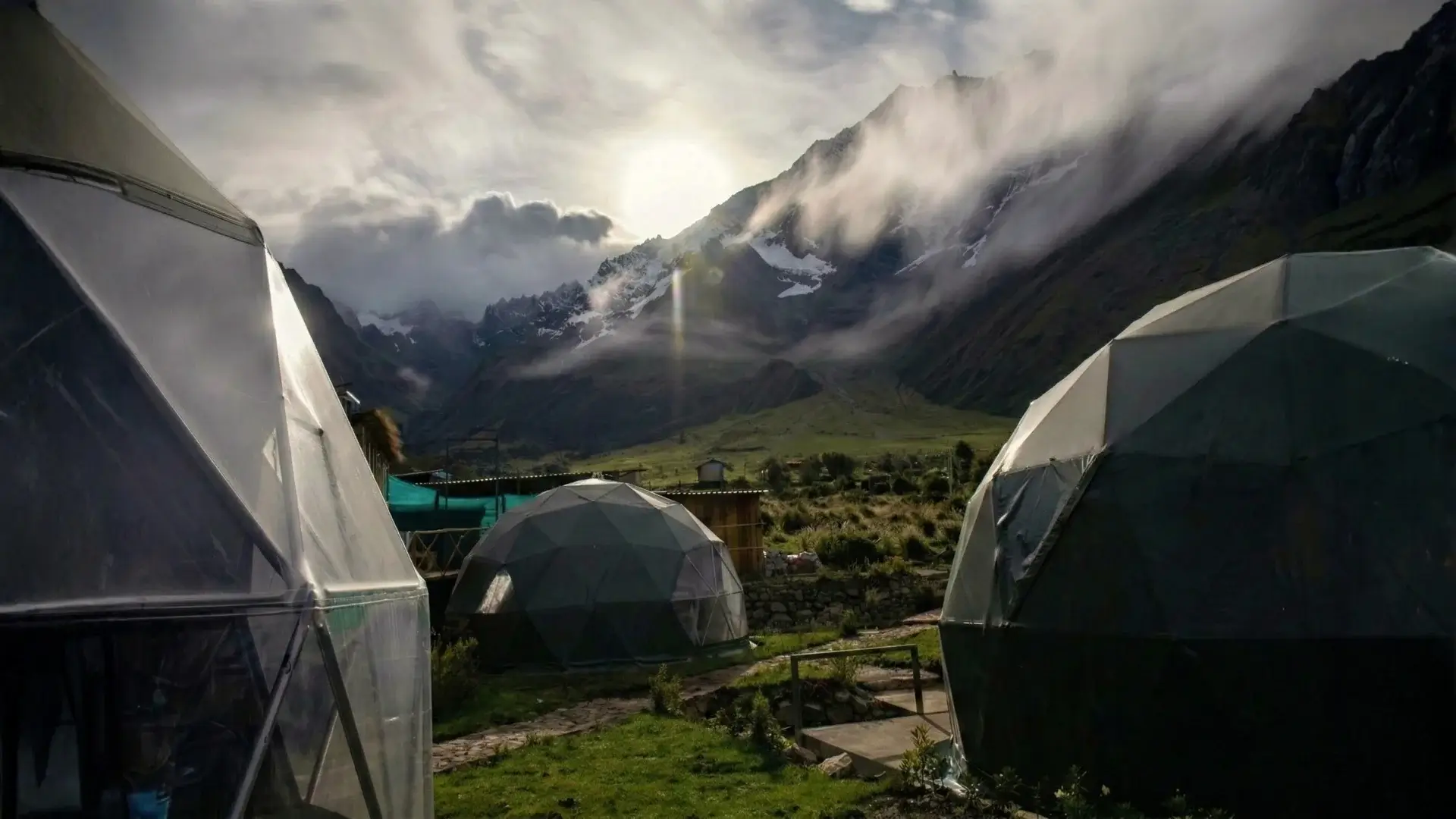
Structural Design: What “Upgraded” Means at 3,800–4,200 Meters
At altitude, structure affects recovery.
Upgraded dome infrastructure typically includes:
- Thermal insulation designed for high-elevation temperature shifts
- Elevated flooring to buffer ground cold
- Private washrooms integrated into each unit
- Permanent or semi-permanent structures rather than temporary tents
- Controlled guest capacity (for example, limited domes accommodating a maximum of around ten guests)
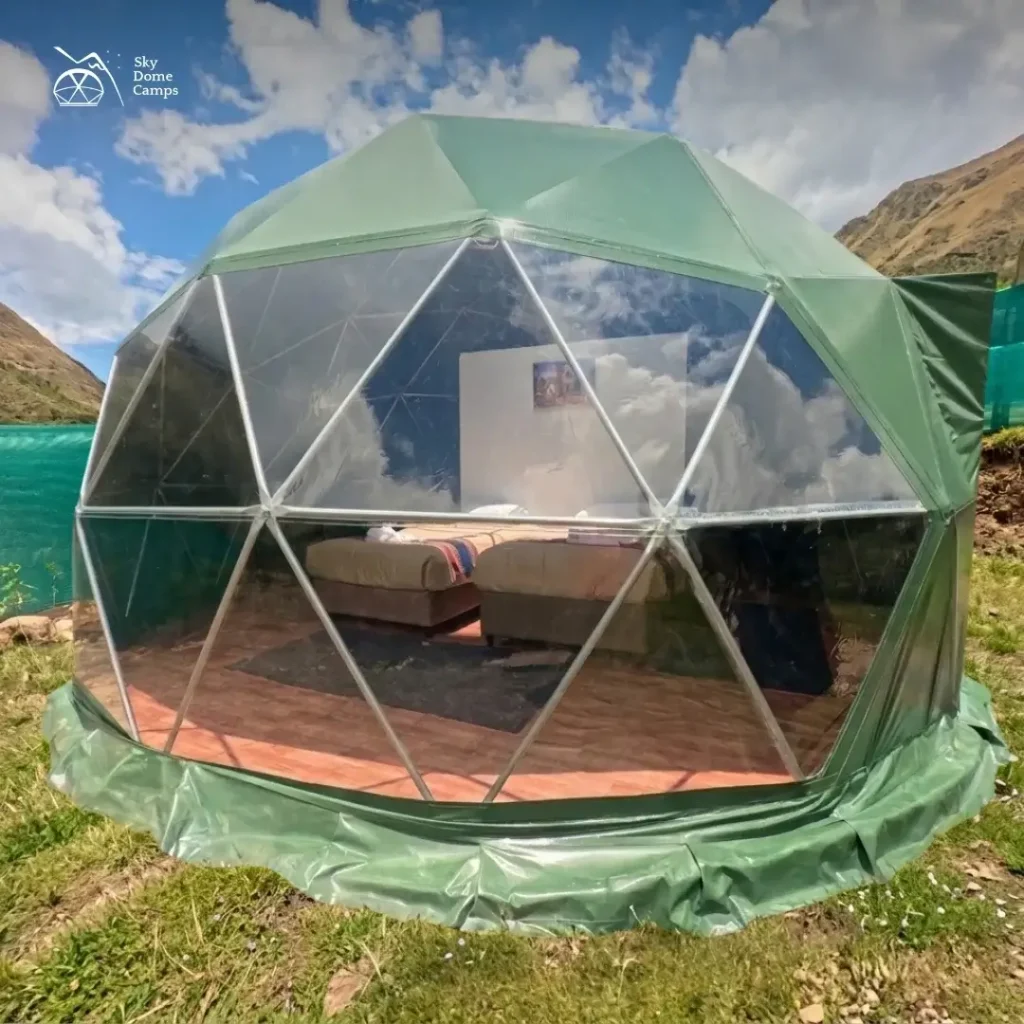
These elements are not aesthetic upgrades. They are environmental control systems. Thin trekking tents provide shelter. Insulated structures provide regulated rest conditions. At altitude, that difference compounds over multiple nights.
Services in Context: Function Over Decoration
Amenities at sea level feel optional. At 3,800+ meters, they become performance variables.
All Meals Included
Structured meal planning ensures caloric stability. Consistent nutrition timing reduces energy crashes and supports muscle repair. Removing logistical friction conserves mental bandwidth.
Wi-Fi Connectivity
Connectivity at altitude is not about entertainment. It offers operational redundancy, emergency communication, and psychological reassurance. Reduced uncertainty improves mental stability.
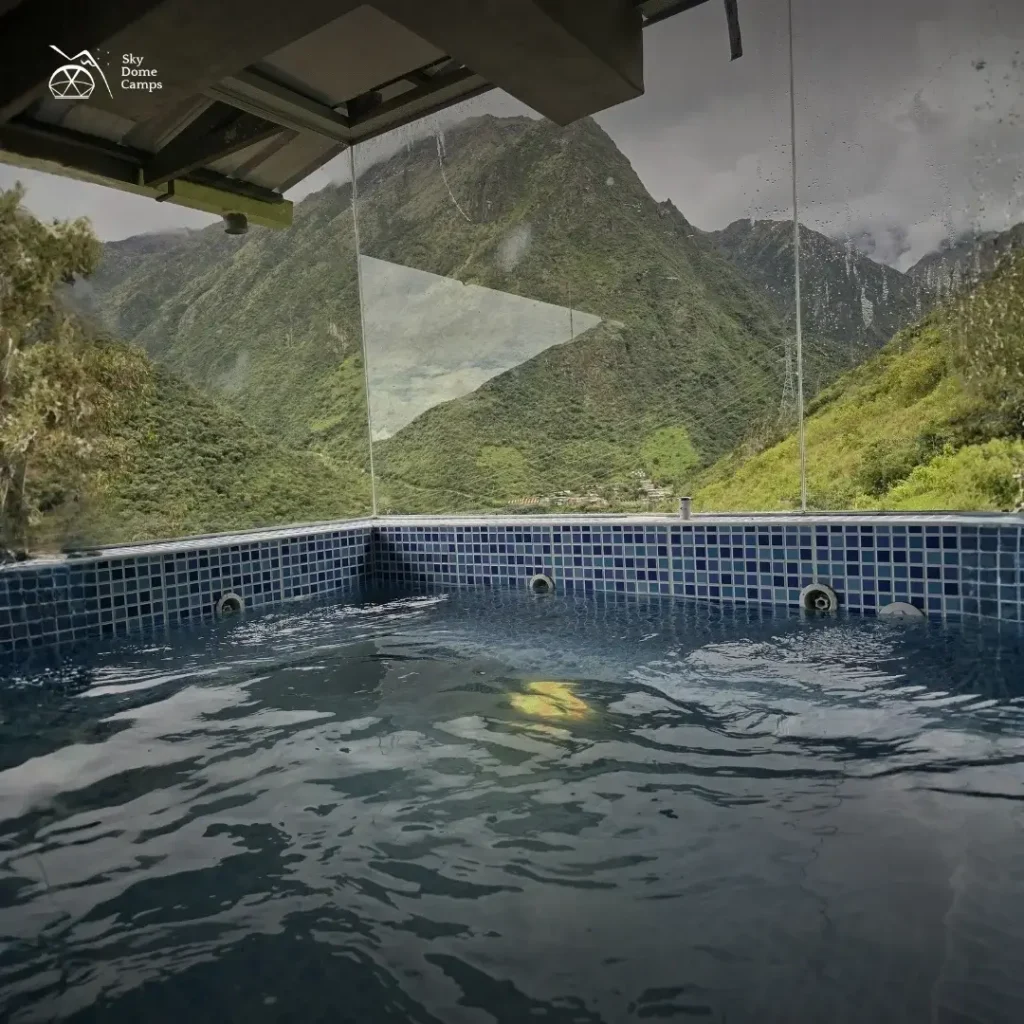
Wet Areas (Sauna & Jacuzzi in Colpapampa)
After crossing a high pass, muscular fatigue and circulation strain accumulate. Heat exposure stimulates blood flow and accelerates recovery. In this context, wet areas function as recovery tools rather than indulgences.
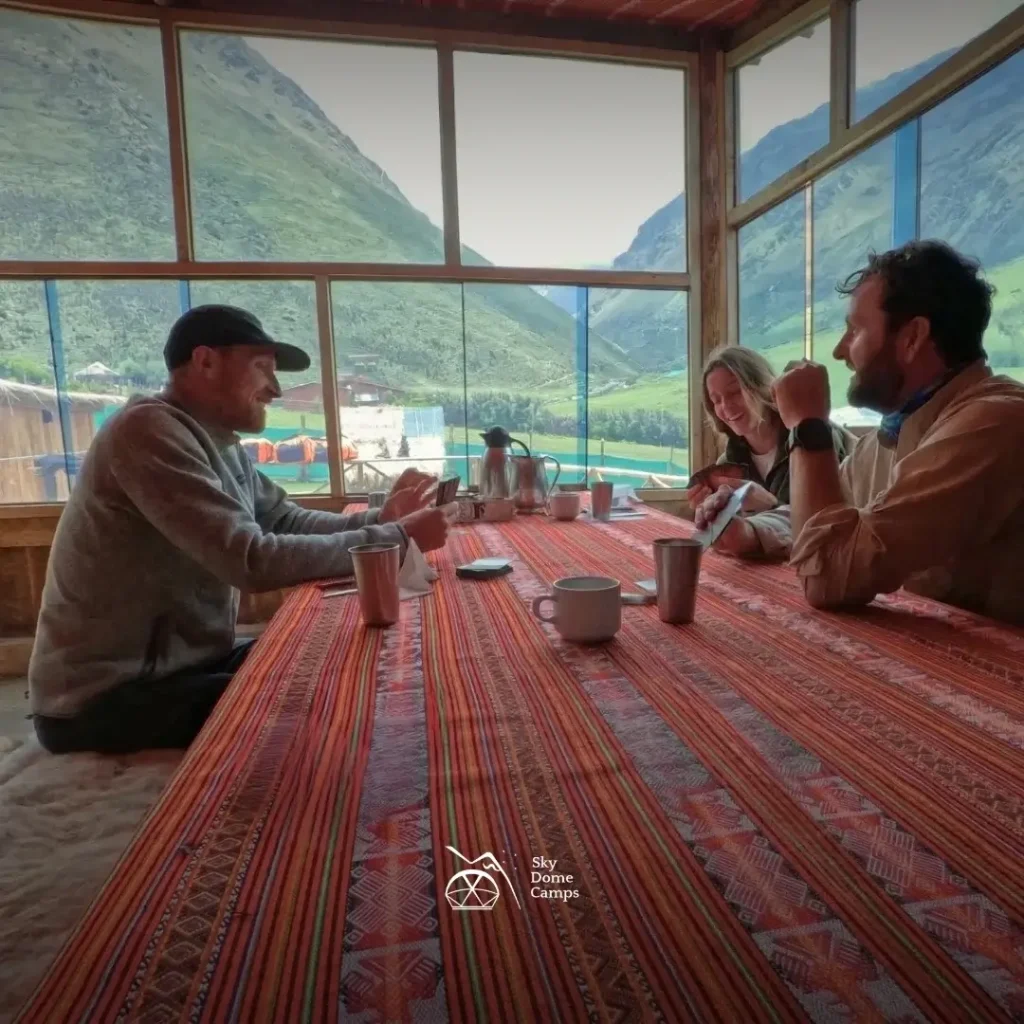
Panoramic Dining Rooms
A protected dining environment provides thermal stability, structured social interaction, and decompression space. Shared meals in controlled conditions support both morale and energy consistency.
Services at altitude should serve function first. When designed correctly, they enhance adaptation rather than distract from it.
Capacity and Experience Control
Guest volume influences experience quality, as limited-capacity infrastructure reduces:
- Noise exposure
- Environmental pressure
- Waiting times
- Resource competition
A smaller, controlled group environment supports better rest and a more stable rhythm across days.
This is not about exclusivity. It is about environmental management.
Standard Camp vs. Structured Dome Infrastructure
The difference becomes clearer when viewed side by side.
| Standard Trek Camp | Structured Dome Infrastructure |
| Shared basic facilities | Private washroom per unit |
| Thin tent fabric | Insulated dome structure |
| Ground-level exposure | Elevated flooring |
| Temporary dining tent | Permanent dining space with view |
| Minimal recovery tools | Wet area for muscle relaxation |
| Large mixed groups | Limited, controlled capacity |
Both allow completion of the trek, but only one optimizes recovery conditions.
Infrastructure Impact Matrix: What Changes in Real Terms
Infrastructure affects more than comfort. It alters recovery quality, psychological state, and overall perception of the trek.
| Infrastructure Variable | Physical Impact | Psychological Impact | Experience Outcome |
| Camp location by altitude band | Supports acclimatization rhythm | Reduces uncertainty before key stages | More stable energy across days |
| Insulated dome structure | Improved thermal retention | Deeper sleep cycles | Stronger next-day performance |
| Private washroom | Reduced cold exposure at night | Increased privacy and stability | Less sleep disruption |
| Limited guest capacity | Lower environmental stress | Greater sense of space | Higher recovery consistency |
| Structured dining room | Consistent caloric intake | Communal decompression | Balanced adaptation |
| Wet area (Colpapampa) | Muscle relaxation & circulation boost | Post-pass reset | Faster descent recovery |
| Wi-Fi connectivity | Communication redundancy | Emotional reassurance | Reduced external stress load |
This matrix reframes infrastructure as a system of variables influencing adaptation, not simply comfort enhancements.
Who Benefits Most from Upgraded Infrastructure?
The decision depends on objectives.
If your goal is strictly to complete the route, standard camps are sufficient.
Upgraded infrastructure becomes relevant if you:
- Prioritize recovery optimization
- Are sensitive to altitude-related fatigue
- Value sleep quality as a performance tool
- Prefer controlled group environments
- Want the trek itself, not just the destination, to feel structured and intentional
On high-altitude routes, accommodation is not separate from the journey. It is part of the physiological and psychological design of the experience.
Choosing infrastructure is choosing how you want your body and mind to process the mountain.