Glass Domes in Peru: Where Can You Sleep Under the Milky Way?
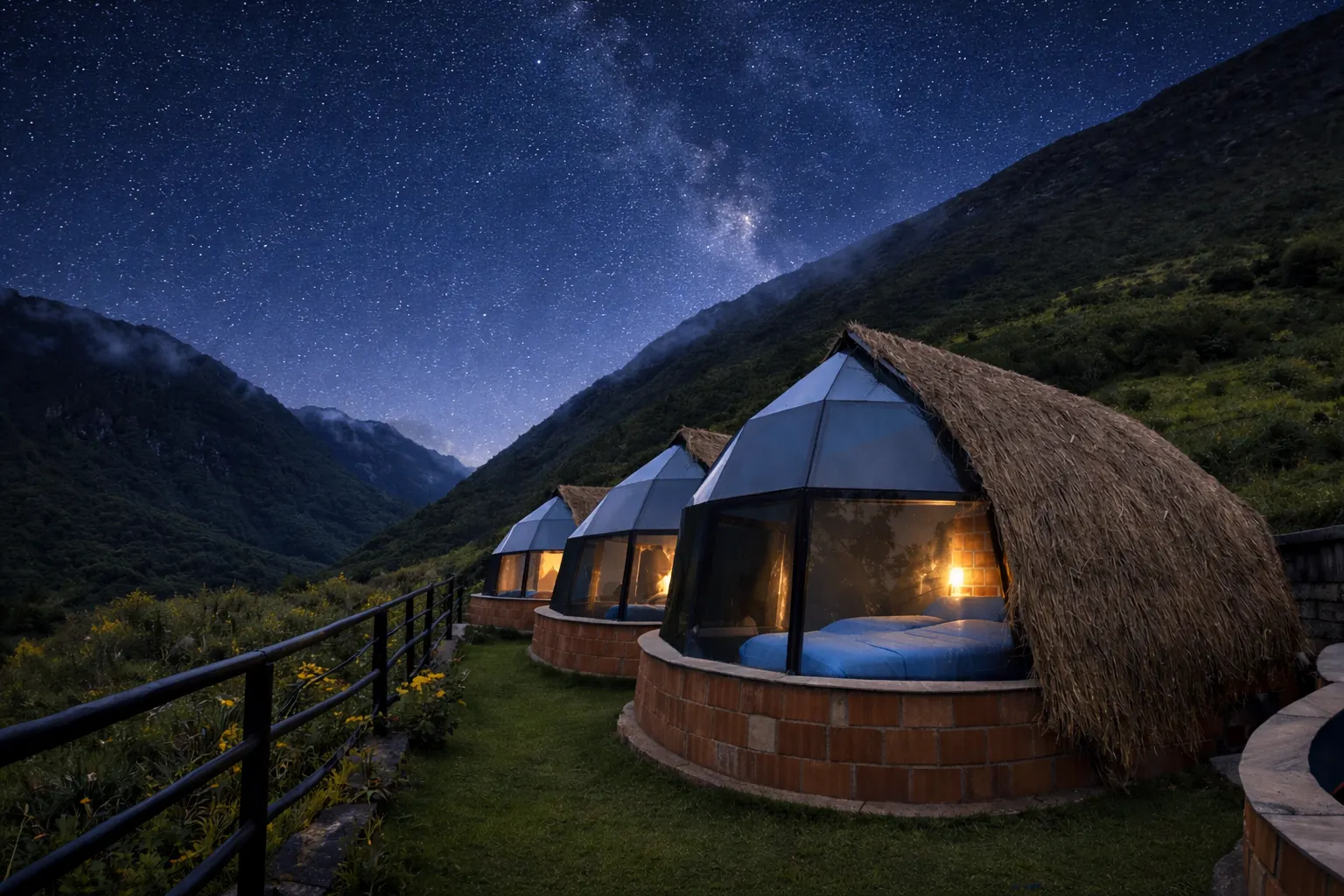
There are few places in the world where you can lie in a real bed, surrounded by silence, and watch the Milky Way stretch across the sky without light pollution or city glow.
The Peruvian Andes is one of them.
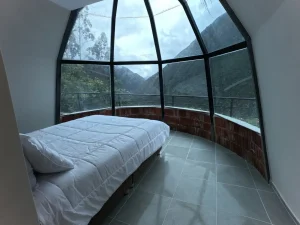
At high altitude, far from urban centers, the night sky becomes part of the landscape. In recent years, panoramic glass domes have redefined how travelers experience this environment, offering immersion without exposure, comfort without disconnection.
So, where in Peru can you actually sleep under the Milky Way in a glass dome?
The answer lies along one of the country’s most powerful mountain corridors.
Why Peru Is Ideal for Glass Dome Glamping
Peru’s geography makes it uniquely suited for high-altitude stargazing experiences.
Several factors come together:
- Elevation above 4,000 meters, where thinner atmosphere enhances sky clarity
- Minimal light pollution in remote Andean valleys
- A defined dry season (May–September) with exceptional night visibility
- Expansive glacier and ridge formations that create unobstructed horizons
In Andean cosmology, the sky was not separate from the earth. The Incas observed constellations not only in the stars, but in the dark spaces between them, interpreting celestial shapes within the Milky Way itself.
To sleep beneath that same sky, at altitude, is not simply scenic. It is geographic alignment.
The Best Locations for Glass Domes in Peru
Strategic placement is everything. A dome in the wrong valley loses its impact. A dome positioned correctly becomes unforgettable.
Sky Dome Camps operates three high-altitude sites along the route of the Salkantay Trek, each selected for both landscape and astronomical visibility.
Soraypampa — Base of Apu Humantay (4,200m)
Located at the first major stage of the Salkantay route, Soraypampa sits beneath the glaciers of Humantay and Salkantay.
At 4,200 meters, the sky is exceptionally clear. There are no nearby towns, no artificial light, and a full 360-degree mountain horizon. The alignment between the glacier walls and the open sky creates an ideal setting for Milky Way visibility during dry-season months.
This location combines:
- High-altitude clarity
- Direct glacier views
- Minimal atmospheric distortion
- Expansive celestial exposure
It is one of the rare places in Peru where glacier and galaxy coexist in a single frame.
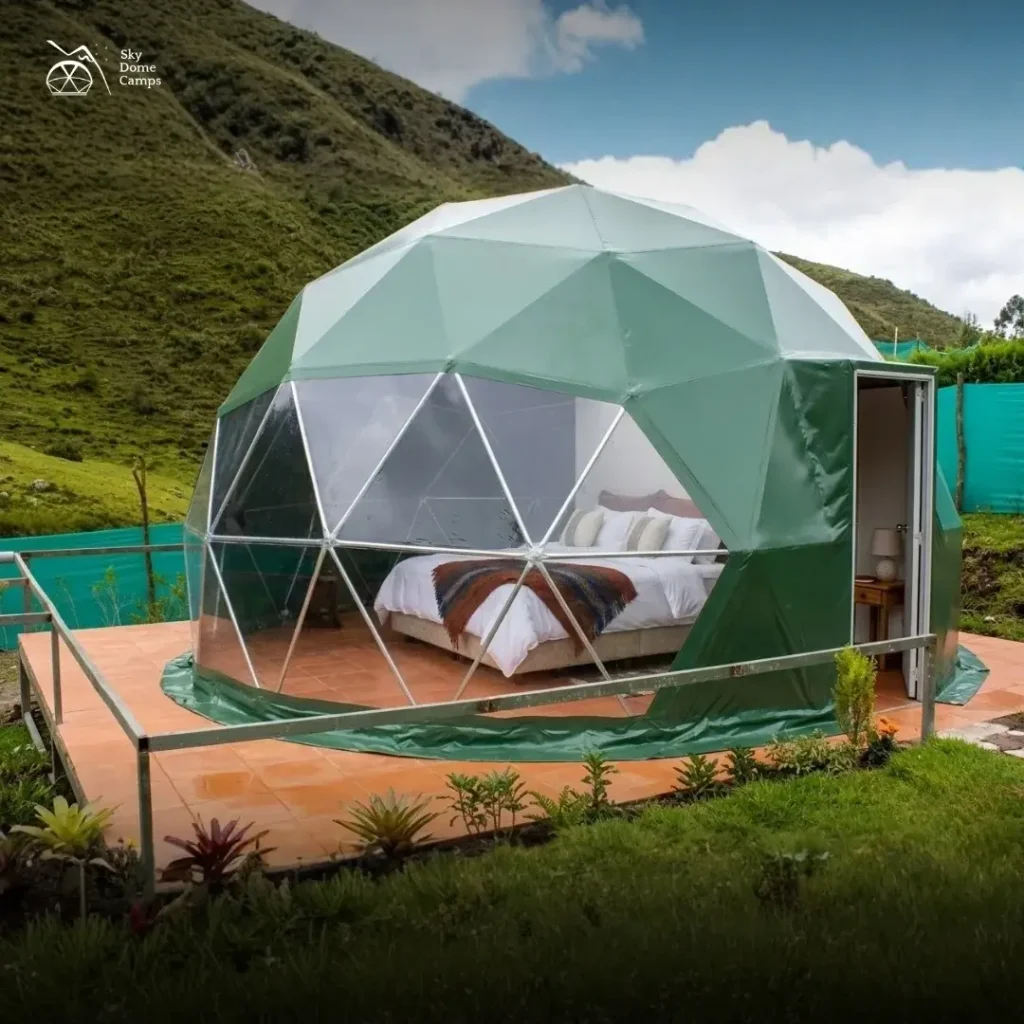
Colpapampa — Cloud Forest Transition Zone
Further along the route, Colpapampa marks the ecological shift from alpine terrain to the upper Cloud Forest.
Although lower in altitude, it remains remote and free from artificial light. Evenings often clear after afternoon cloud movement, revealing a deep, jungle-framed sky. This site also incorporates recovery-focused infrastructure, including sauna and jacuzzi, creating a contrast between wilderness immersion and restorative comfort.
Colpapampa offers:
- Jungle-edge stargazing
- Quiet valley isolation
- Recovery-centered design
It is less about altitude intensity and more about atmospheric depth.
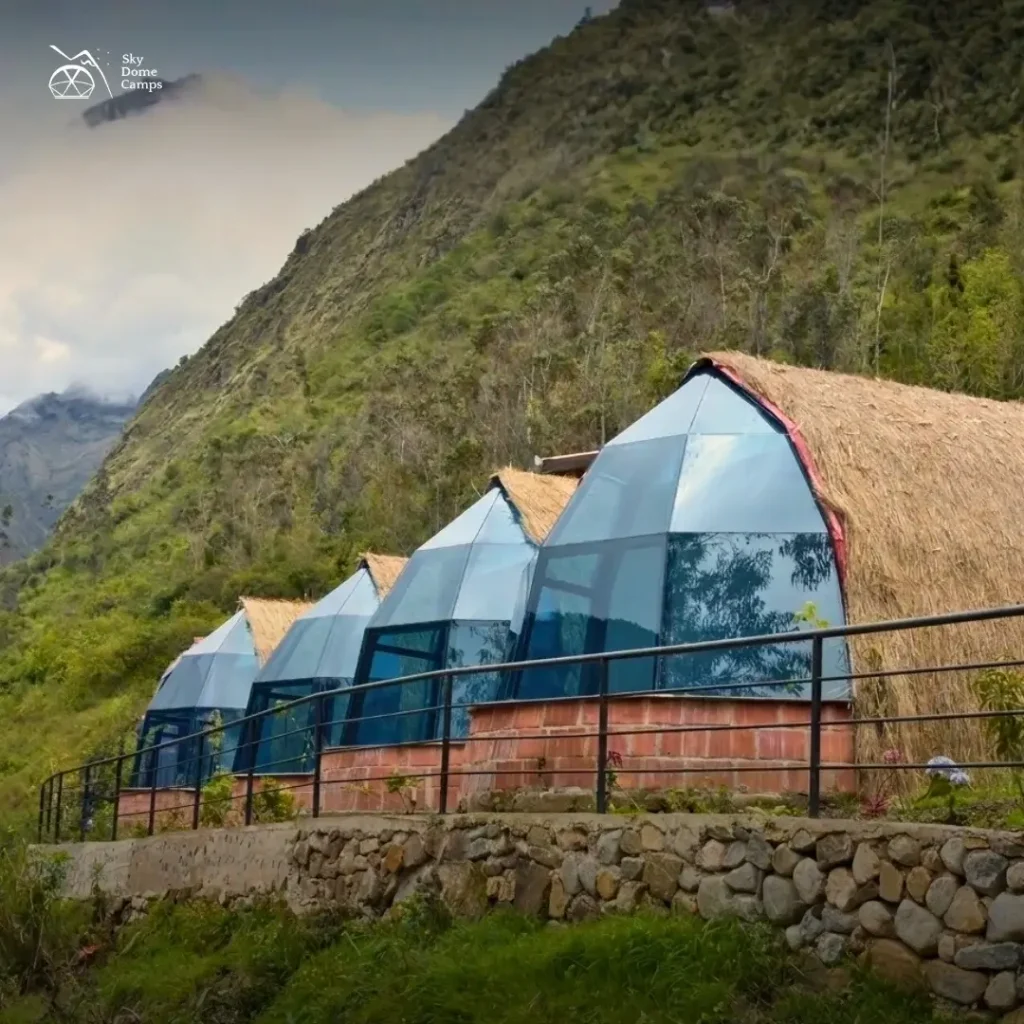
Llaqtapata Ridge — Overlooking Machu Picchu
Perched on a high ridge above the Urubamba Canyon, Llaqtapata offers one of the most strategic vantage points in the region.
From this elevated position, travelers can observe the distant silhouette of Machu Picchu across the valley by day — and an expansive west-facing sky by night.
The ridge positioning provides:
- Clear horizon exposure
- Limited capacity for quiet stays
- A rare perspective that combines archaeology and astronomy
Few overnight locations in Peru offer both a historical sightline and celestial immersion in the same setting.
What Makes a Strategic Glass Dome Location?
Not all domes are created equal. The success of a stargazing lodge depends on measurable geographic factors:
- Altitude – Higher elevation reduces atmospheric interference.
- Light pollution – Distance from urban centers is critical.
- Horizon exposure – Mountain alignment must allow open sky visibility.
- Wind and terrain protection – Comfort must not compromise structural stability.
- Access without overcrowding – Remoteness must remain intact.
Each Sky Dome Camps site was selected according to these criteria, ensuring the experience is not decorative, but intentional.
Who Is This Experience Designed For?
Sleeping under the Milky Way in the Andes is not a mass-tourism concept. It appeals to travelers seeking immersion with refinement.
It is particularly suited for:
- Couples and honeymooners
- Photography enthusiasts
- High-comfort trekkers
- Design-conscious travelers
- Guests seeking privacy in remote landscapes
The experience blends wilderness scale with architectural simplicity.
How to Experience These Glass Domes
Sky Dome Camps infrastructure is integrated into curated trekking itineraries operated by select high-quality partners. Each offers a distinct approach to the Salkantay corridor while incorporating the dome experience into their route design.
Below is an overview of the primary operators:
| Company | Service Level | Main Differentiator | Ideal Traveler |
| 69explorer | Premium Adventure | Design-forward trekking itineraries with strong aesthetic and experiential focus | Explorers seeking curated, visually driven journeys |
| Apple Travel Peru | Luxury Experiential | Comfort-centered trekking with 3-star standard logistics and hospitality focus | Couples and travelers prioritizing elevated comfort |
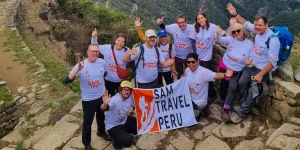
| Sam Travel Peru | Established Trekking Operator | Operational expertise and classic trekking structure with reliable execution | Experienced trekkers seeking trusted logistics |
Each company incorporates Sky Dome Camps as part of broader multi-day trekking programs, ensuring the dome experience is integrated within a complete, professionally supported route toward Machu Picchu.
Why Sleeping Under the Milky Way in the Andes Is Different
High-altitude stargazing exists in many countries. But few combine:
- Glacier proximity
- Sacred mountain geography
- Pre-Columbian astronomical heritage
- A trekking approach culminating at Machu Picchu
In the Peruvian Andes, the sky does not feel separate from the landscape. It feels anchored to it.
A glass dome simply removes the barrier between the two.