Coffee in the Cloud Forest: The Lucmabamba Experience on the Salkantay Trek
The moment you descend from the cold silence of the high Andes into the warm, green folds of the cloud forest, the journey shifts. The air softens, the trail narrows, and suddenly coffee appears. Not as a drink, but as a landscape.
In the valleys around Lucmabamba Valley and Santa Teresa, coffee is not an attraction built for travelers. It’s a way of life. And along the Salkantay route, it becomes one of the most grounded, sensory experiences of the entire journey.
Where Coffee Meets the Salkantay Route
By the time you reach this section of the trek, you’ve already crossed the dramatic heights of Salkantay Pass. What follows is a descent into a completely different ecosystem: humid, fertile, and intensely alive.
This is where coffee thrives.
The Lucmabamba sector sits at the perfect altitude for cultivation, with consistent rainfall, rich soil, and warm temperatures year-round. Unlike industrial coffee regions, production here is small-scale, often family-run, and deeply tied to the land.
For trekkers, this transition isn’t just visual, it’s experiential. Coffee becomes part of the trail itself.
The Coffee Experience: From Plant to Cup
This isn’t a tasting. It’s a process you walk through.
Most experiences in the area are hosted by local families who cultivate their own plots. The visit typically unfolds step by step, with a focus on understanding rather than performance.
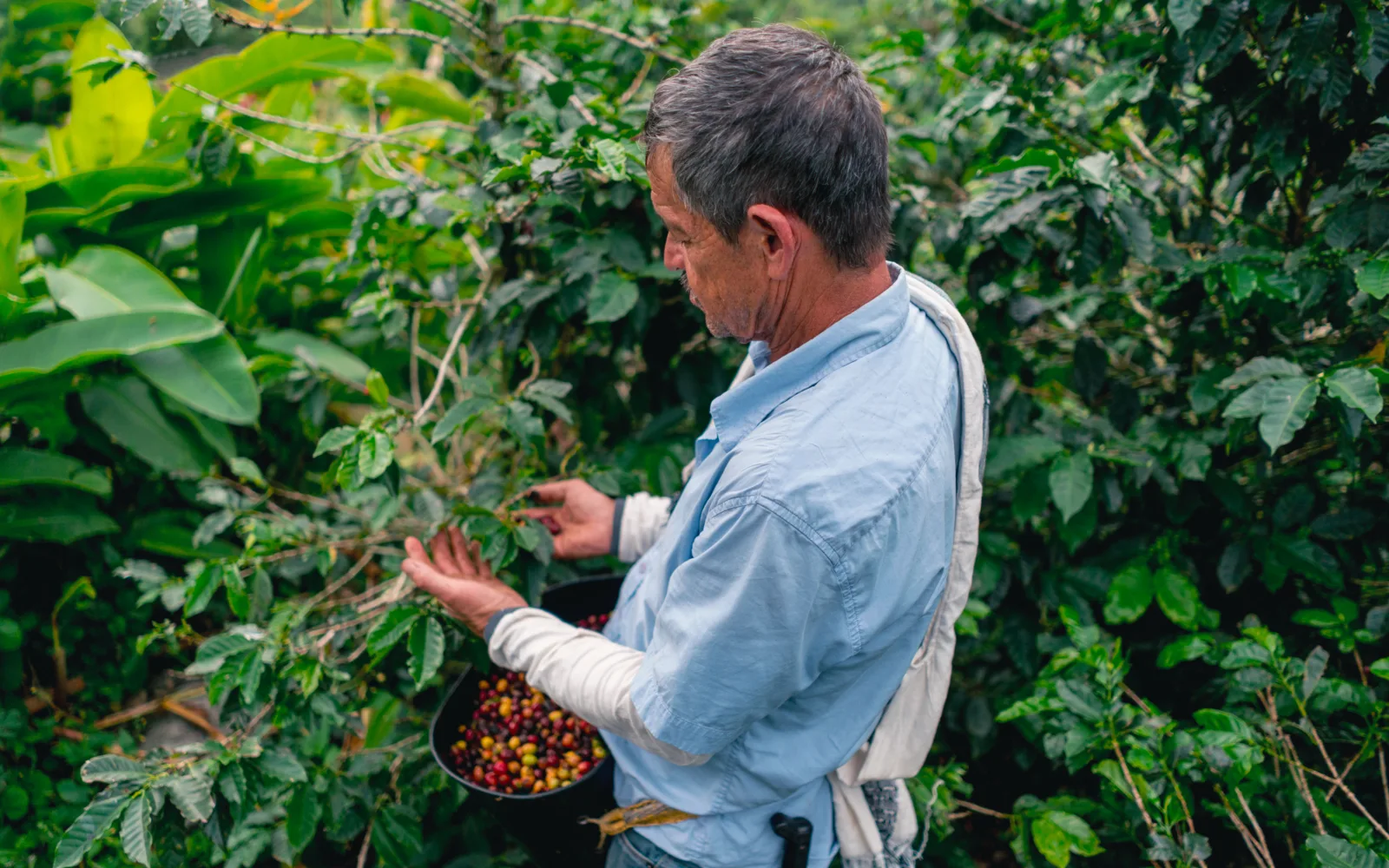
Harvesting the cherries
You begin in the fields, where ripe red coffee cherries are picked by hand. There’s no machinery, just timing, instinct, and experience.
Pulping and fermenting
Back at the farm, the outer skin is removed, revealing the beans inside. They’re then left to ferment naturally, a crucial step that defines flavor.
Drying under the sun
Beans are spread out on simple patios or raised beds. The pace is slow and entirely dependent on weather conditions.
Roasting over firewood
Small batches are roasted manually, often in metal pans over open flames. This is where the aroma hits deep, earthy, unmistakably fresh.
Grinding and brewing
Finally, the coffee is ground and prepared on the spot. No packaging, no branding, just a direct connection between land and cup.
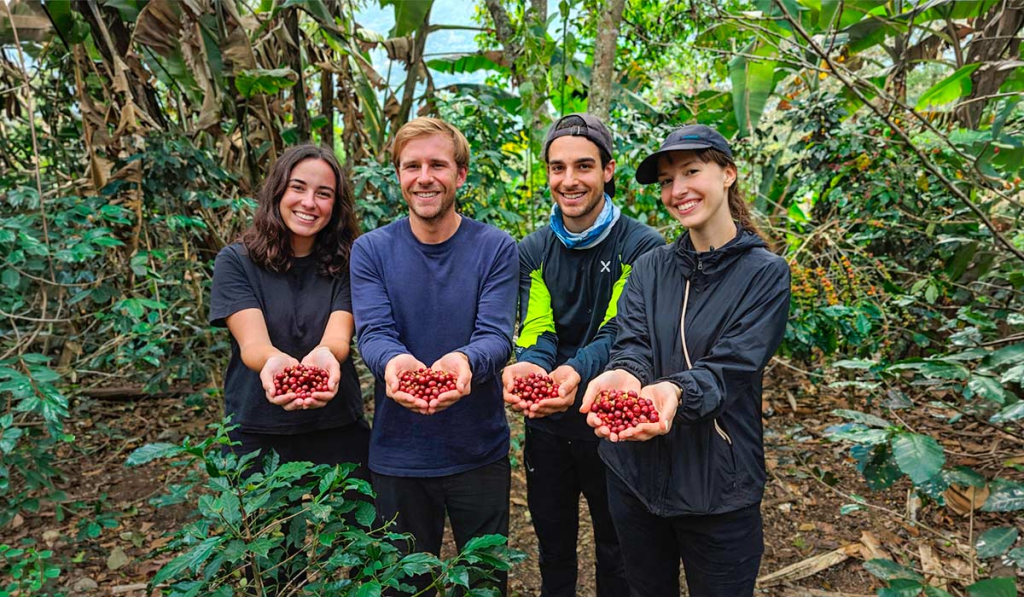
Why It Feels Different Here
Coffee tastes different when you’ve seen where it comes from. But in Lucmabamba, it’s more than that.
There’s no separation between producer and experience. You’re not observing a process, you’re stepping into someone’s daily routine. The scale is intimate, the methods are traditional, and the conversation often matters as much as the coffee itself.
Compared to curated tastings in cities like Cusco, this feels unfiltered. Less polished, more real.
A Cultural Layer to the Trek
The Salkantay route defines by its landscapes: glaciers, passes, jungle. But the coffee experience adds something quieter and arguably more lasting: context. It connects the trek to the people who live along it.
In the Santa Teresa Valley coffee agriculture supports economy, along with fruits and cacao. Also, reflects generations of knowledge adapted to this specific terrain.
For many travelers, this stop becomes a reset point, a moment to slow down after the physical intensity of the trek and engage with something tangible.
When It Happens on the Trek
Most Salkantay itineraries include the coffee experience on Day 3, after arriving in Lucmabamba. It naturally fits into the route, without requiring detours or additional logistics.
Whether you’re on a classic trekking itinerary or a more comfort-oriented version, this experience is often included or available as an optional visit.
Is It Worth It?
If you’re expecting a polished coffee tour, this might feel too simple. But that simplicity is exactly the point. This is one of the few moments on the Salkantay Trek where the experience isn’t about altitude, distance, or landmarks, it’s about connection. To place, to people, and to a process that most of us only ever encounter at the final step. And that’s what makes it memorable.