Colpapampa: The Hidden Village of the Salkantay Trek
Every major trek has a turning point, the moment when endurance gives way to recovery.
On the Salkantay Trek, that moment comes after crossing the 4,630-meter Salkantay Pass. The hardest climb is behind you. Oxygen levels feel easier. Vegetation begins to return. The landscape softens.
And then, at the edge between high alpine terrain and the first layers of cloud forest, you reach Colpapampa.
This is not simply a campsite along the trail. It is the recovery threshold of the route.
Where Geography Creates Advantage
Colpapampa sits at approximately 2,800–3,000 meters above sea level, positioned precisely between two ecological zones: the High Puna and the Ceja de Selva (cloud forest).
That elevation matters.
- It is low enough to significantly reduce altitude stress.
- High enough to maintain cool, stable temperatures.
- Protected from extreme alpine wind.
- Not yet affected by heavy tropical humidity.
This transitional microclimate creates ideal sleeping conditions after the most physically demanding day of the trek. In mountain logistics, location is not accidental. It determines recovery quality.
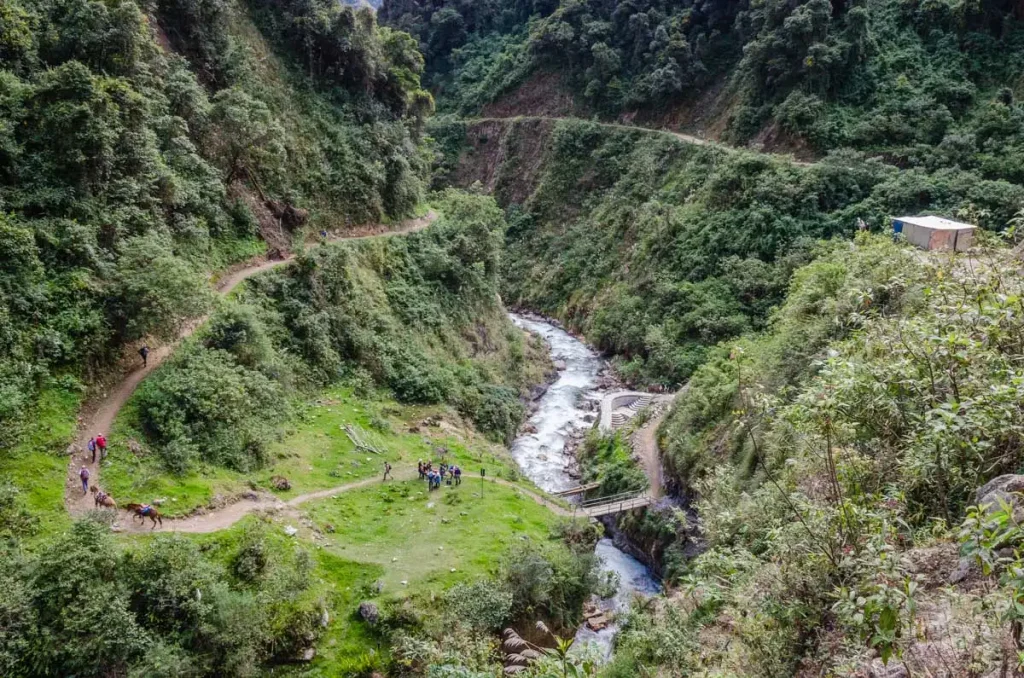
Between Two Ecosystems
Colpapampa exists in ecological balance.
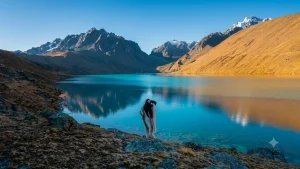
The Last Breath of the High Andes
Mountain walls still rise behind you. Glacier-fed streams descend from above. The air carries residual coolness from higher elevations.
The First Signs of the Cloud Forest
Vegetation thickens. Moisture increases. Ferns and moss begin to appear. The landscape turns progressively green.
This convergence produces one of the most visually dynamic sections of the route. You are suspended between alpine austerity and jungle abundance.
Few locations along the Salkantay corridor offer that dual perspective.
From Traditional Campsite to Benchmark Infrastructure
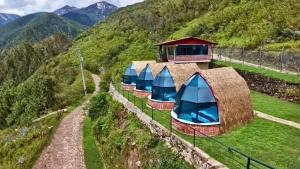
For years, Colpapampa functioned as a simple camping zone: temporary tents, basic facilities, minimal infrastructure.
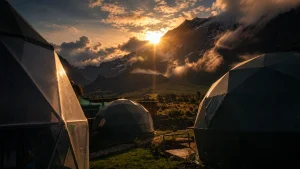
In recent seasons, some operators introduced glamping-style setups. But upgrading canvas was never the objective.
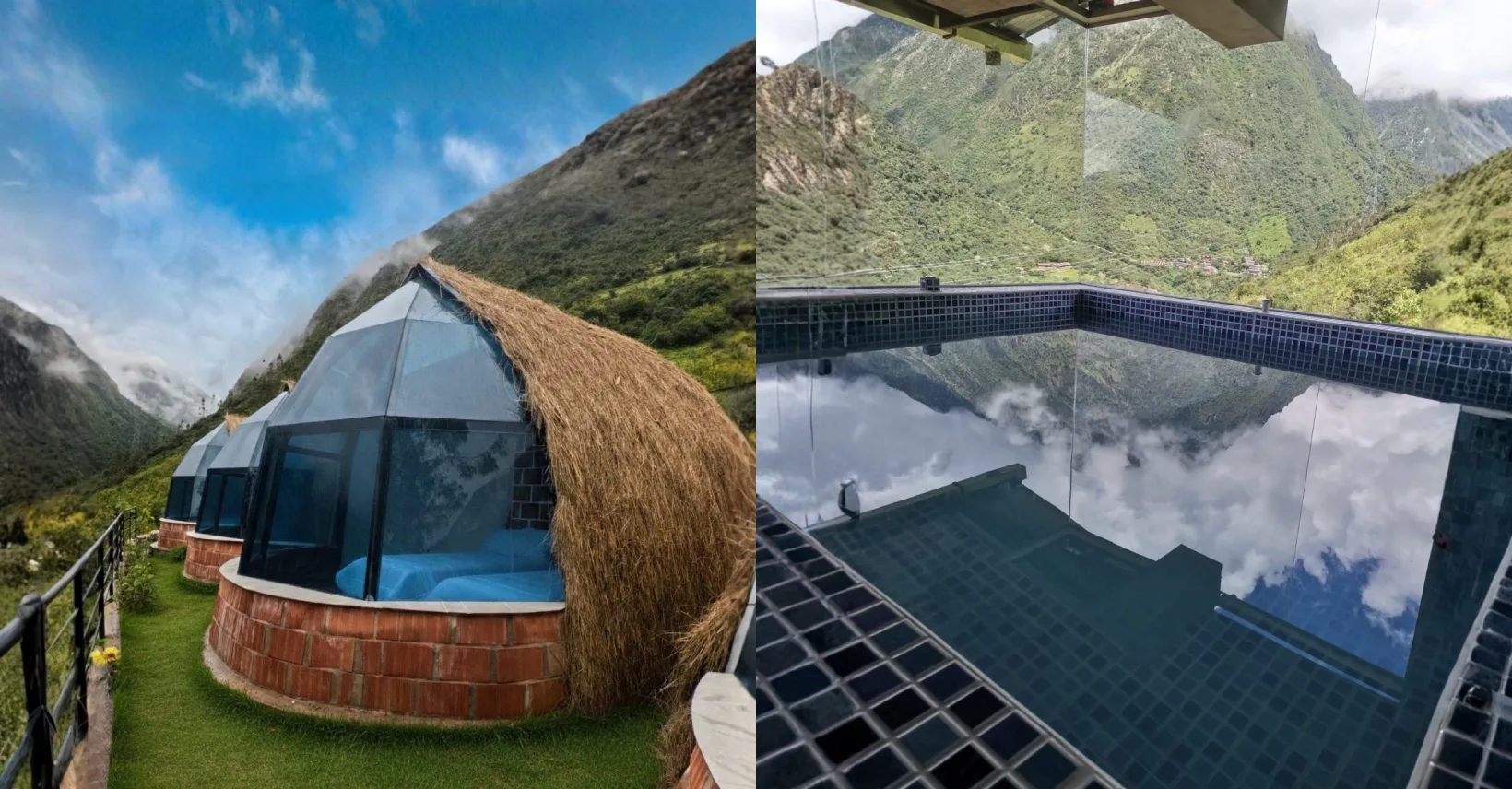
The goal was to establish a true 3-star hotel room equivalent at a strategic recovery point on the mountain.
That meant:
- Permanent insulated structures
- Private accommodation
- En-suite bathrooms
- Professional dining infrastructure
- Controlled utilities and lighting systems
The concept was simple: redefine what recovery should look like after a 4,630-meter pass.
Why Colpapampa Is the Ideal Recovery Hub
The placement of Colpapampa is not aesthetic, it is physiological.
Altitude Reset
Sleeping nearly 1,500 meters below the pass improves oxygen absorption and muscular recovery. Fatigue decreases more efficiently when the body is no longer under extreme altitude stress.
Climate Stability
Nights are cool but not freezing. The air is humid enough to feel fresh, but not heavy. Temperature swings are far milder than in the alpine zone.
Hydrological Setting
Nearby streams and increasing cloud forest moisture create a naturally temperate environment. The soundscape shifts from high-altitude wind to flowing water, a subtle but meaningful change.
Thermal Recovery Infrastructure
This is where Colpapampa sets a new benchmark.
The inclusion of jacuzzi and sauna facilities within the dome complex transforms recovery from passive rest into active regeneration.
- Warm hydrotherapy improves circulation after long descents.
- Heat exposure aids muscular relaxation.
- Contrast between cool mountain air and controlled heat accelerates recovery.
On a demanding expedition, these are not indulgences. They are performance tools.
In the context of multi-day high-altitude trekking, thermal recovery infrastructure is a game changer.
A Strategic Convergence Before Machu Picchu
The Choquequirao Trek and the Salkantay Trek are distinct expeditions. They cross different valleys, mountain systems, and archaeological corridors.
However, both routes converge geographically before continuing toward Machu Picchu. Not a combined journey. A shared threshold before the last stage, Colpapampa becomes a shared reset point before the final Machu Picchu leg.
For Salkantay hikers: It is the reward after the pass.
For Choquequirao hikers (coming from one of South America’s most demanding multi-day treks): It represents the first opportunity for structured, high-standard rest before entering the final corridor toward Machu Picchu.