The Case for Domes in High-Altitude Trekking
Most trekkers see domes as an upgraded accommodation format: more comfortable, more refined, more visually appealing.
That interpretation is incomplete.
At high altitude, structural design is not an aesthetic decision. It is an environmental response. Geometry, insulation, and spatial configuration directly influence wind resistance, thermal retention, sleep quality, and psychological stability.
In high-altitude environments, structure is not about appearance. It is about physics. Understanding why dome architecture works in the mountains requires looking beyond comfort and into systems.
Geometry and Wind Resistance
Why Shape Matters Above 3,500 Meters
Mountain environments generate irregular wind patterns. Flat-panel tents absorb wind force unevenly, concentrating pressure along seams and anchor points.
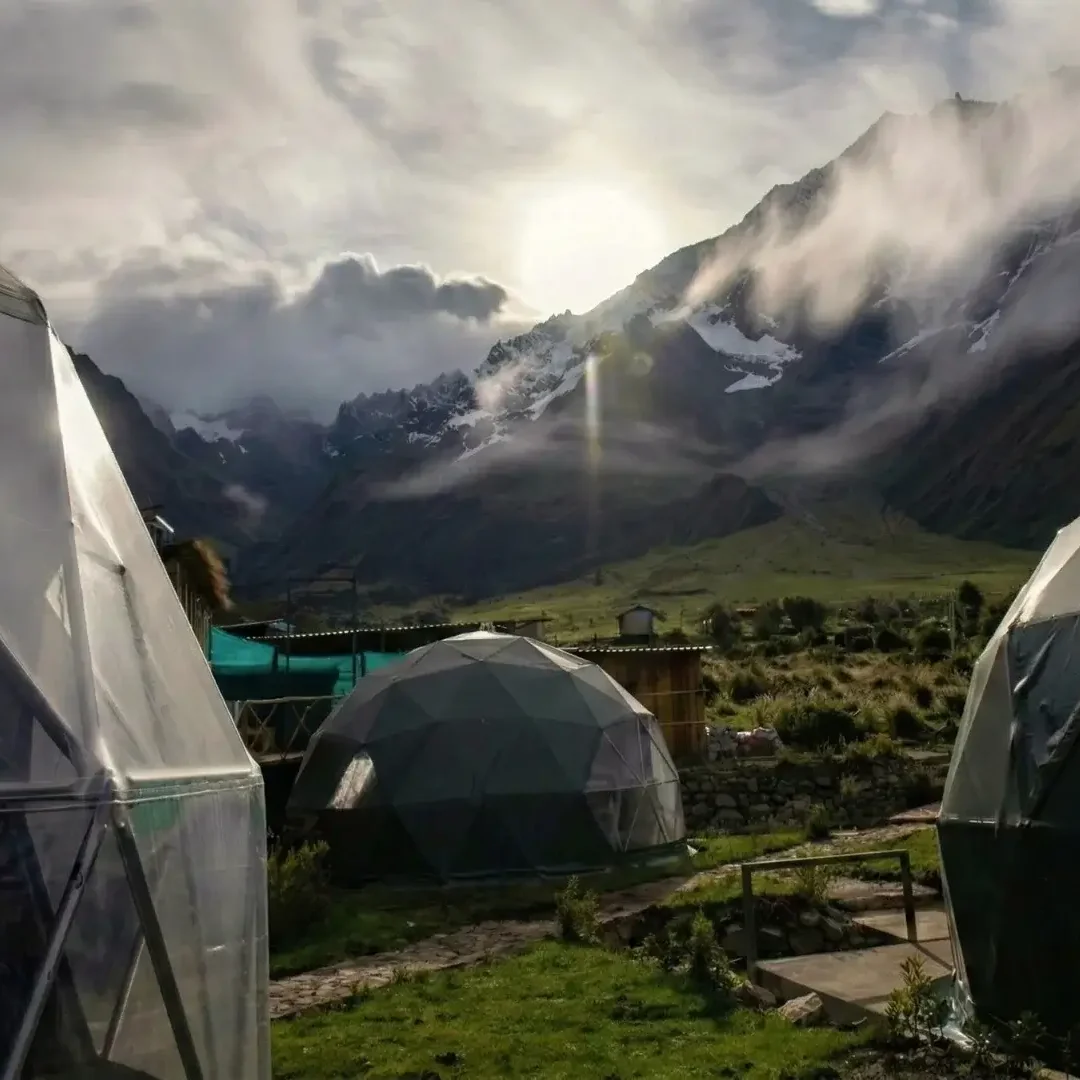
Curved dome structures distribute wind load across their entire surface. There are no large vertical panels to catch direct resistance. The aerodynamic profile reduces stress concentration and improves stability.
In exposed alpine zones, this matters.
Over multiple nights, consistent structural stability contributes to deeper rest and reduced environmental noise intrusion. Geometry becomes a form of protection: not in theory, but in daily use.
Thermal Efficiency and Insulation Logic
Managing Heat Loss at Altitude
Above 3,500 meters, nighttime temperatures drop rapidly. Thinner air accelerates heat dissipation. Ground exposure increases conductive heat loss.
Standard trekking tents provide shelter but minimal insulation. Thin fabric and direct ground contact allow temperature fluctuation inside the sleeping space.
Insulated dome systems introduce:
- Layered wall structures
- Reduced surface heat escape due to curvature
- Elevated flooring that buffers ground cold
- Enclosed environments that stabilize internal temperature
Thermal regulation influences sleep cycles. Sleep depth influences muscular recovery. Recovery quality influences next-day performance.
At altitude, warmth is not luxury. It is physiological infrastructure.
Environmental Buffering Without Isolation
A key advantage of dome architecture is controlled exposure.
Traditional trekking tents are designed primarily for survival efficiency: low profile, minimal surface area, functional confinement.
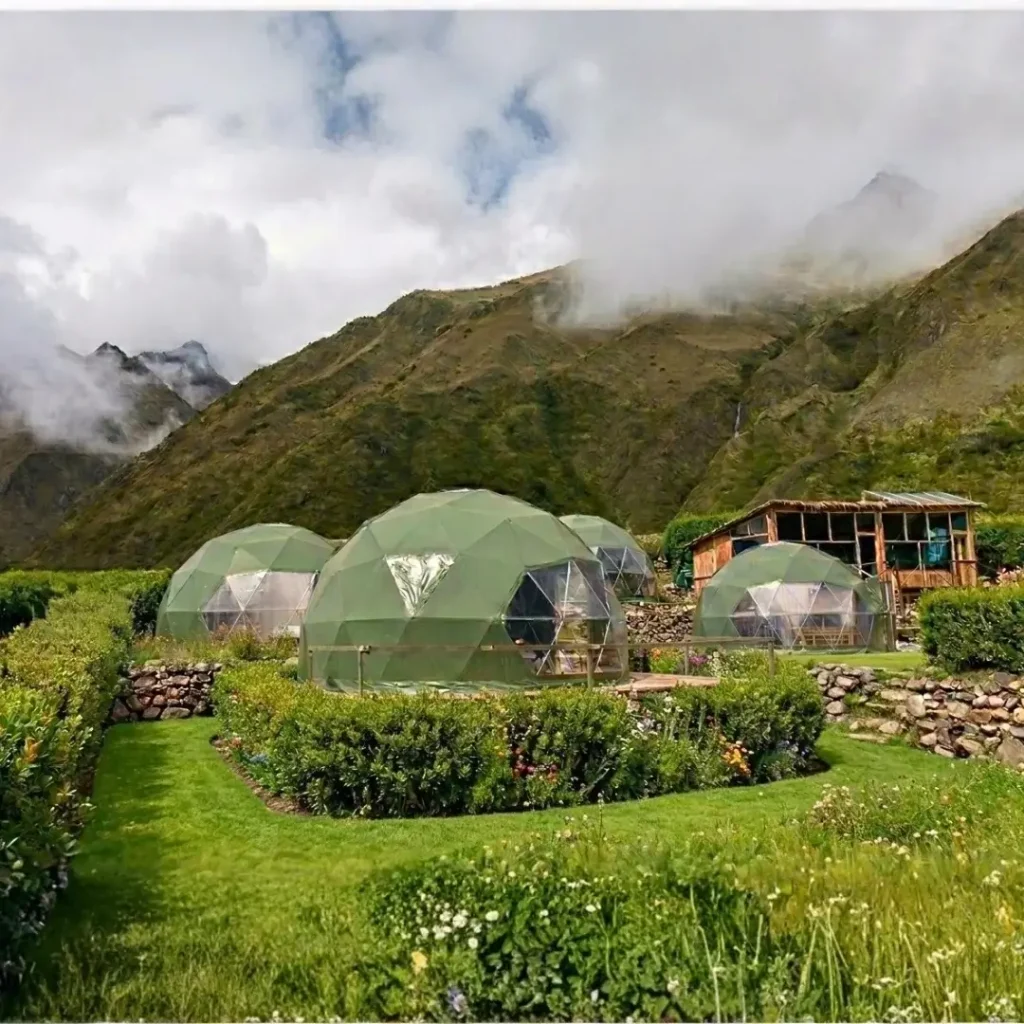
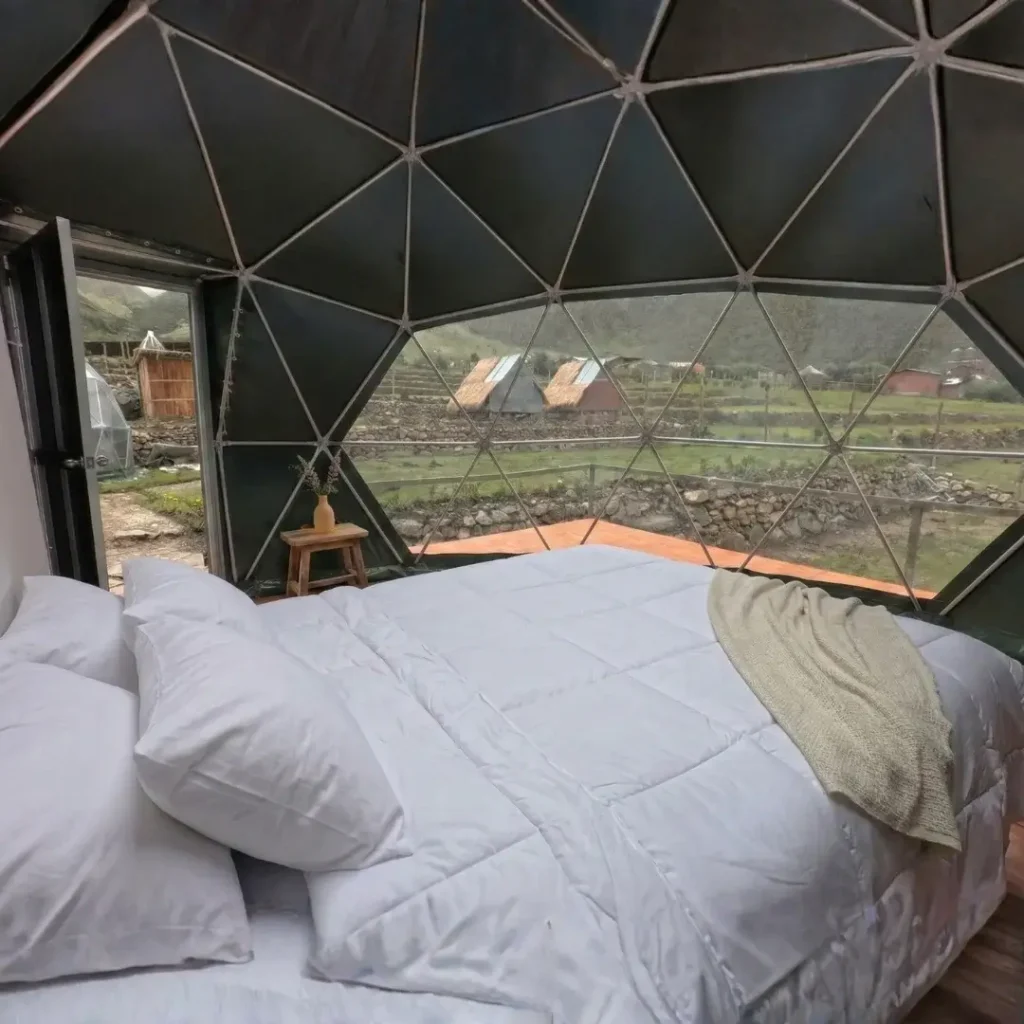
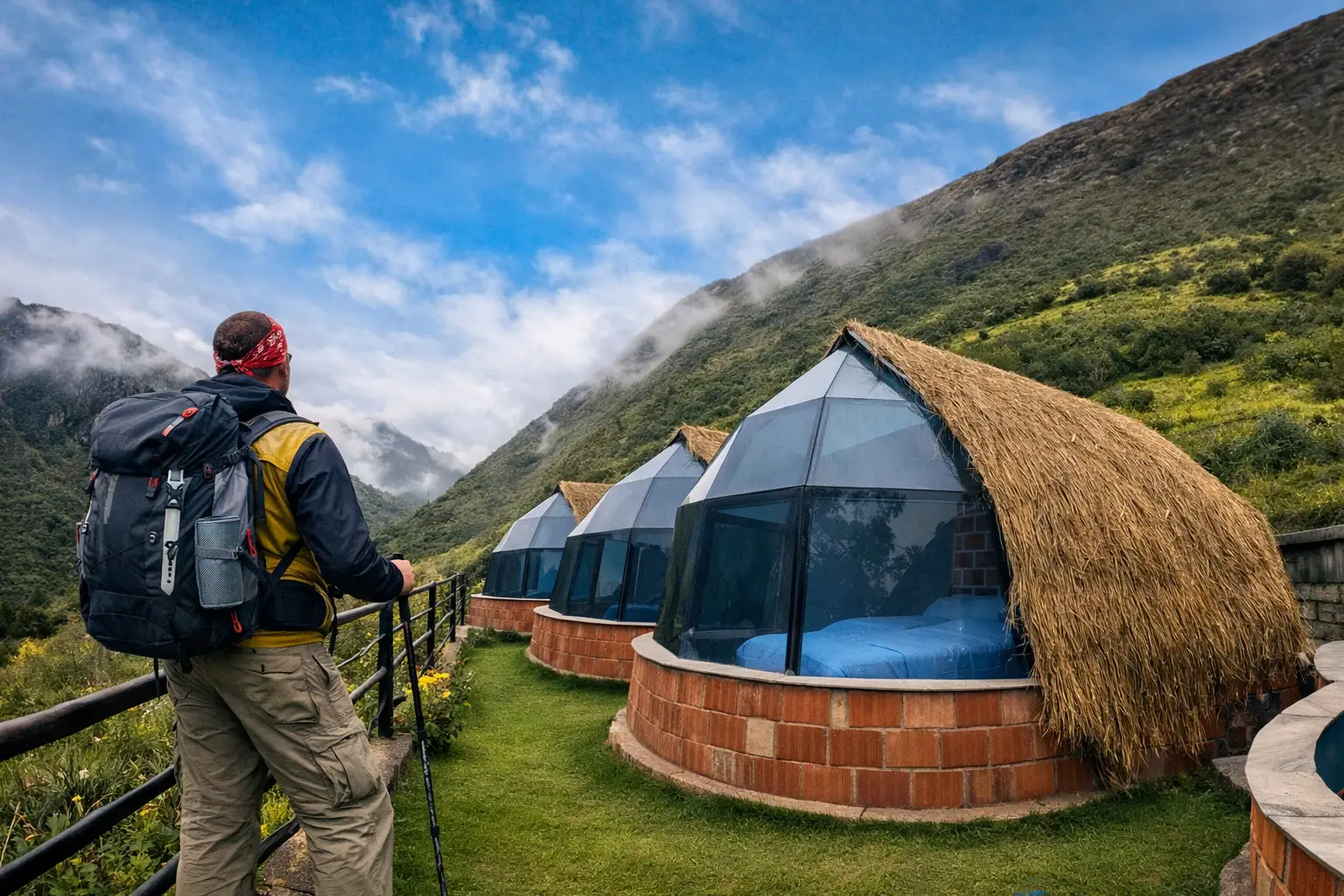
Dome structures introduce a different balance. Their panoramic orientation and vertical interior space maintain visual continuity with the surrounding landscape while preserving environmental control.
Natural light diffusion, open spatial perception, and 360° visual access reduce the sense of confinement that accumulates across multi-day routes.
Domes allow you to remain connected to the landscape without being vulnerable to it.
This balance, immersion without exposure, becomes especially valuable in remote alpine settings.
Psychological Design in Multi-Day Treks
High-altitude trekking is cumulative stress.
Physical fatigue compounds across days. So does cognitive load.
Confined spaces, limited privacy, and environmental unpredictability increase psychological strain. Over time, that strain influences mood, energy management, and perceived effort.
Dome infrastructure alters this dynamic by introducing:
- Vertical interior space
- Greater autonomy through integrated private facilities
- Reduced environmental noise
- Structured rest environments
Energy conservation on a mountain is not only muscular. It is cognitive.
A stable sleeping environment reduces decision fatigue and supports emotional steadiness across stages.
Structural Comparison: Tents vs Dome Infrastructure
When viewed systematically, the differences become clearer.
| Variable | Standard Trek Tent | Dome Infrastructure |
| Wind Load Distribution | Concentrated on flat panels | Evenly distributed across curved surface |
| Thermal Retention | Minimal insulation | Insulated, enclosed environment |
| Ground Exposure | Direct ground contact | Elevated flooring |
| Spatial Perception | Low ceiling, confined interior | Vertical, open interior |
| Visual Interaction | Limited external visibility | Panoramic exposure |
| Recovery Stability | Variable | Controlled rest environment |
Both systems function. Only one is designed to optimize environmental mediation.
Who Benefits Most from Dome Infrastructure?
Domes are not required to complete a high-altitude trek.
They are relevant for travelers who:
- Prioritize recovery quality across multiple days
- Are sensitive to cold exposure
- Value stable sleep conditions at elevation
- Prefer controlled group environments
- Seek immersion without sacrificing structural security
- Approach trekking as an experience to optimize, not simply complete
The distinction is not about luxury. It is about design intention.
Design as Experience Engineering
High-altitude trekking is a negotiation between the human body and environmental forces.
Infrastructure mediates that negotiation.
Dome architecture responds to:
- Wind distribution
- Thermal fluctuation
- Spatial perception
- Psychological endurance
The result is not simply a more comfortable night. It is a more stable multi-day rhythm.
In the mountains, the right structure does not compete with the landscape. It allows you to experience it with greater stability.