Toilets on the Salkantay Trek: Why Private Bathrooms Change Everything
The Most Overlooked Part of Trekking Comfort
The Salkantay Trek is usually described through its landscapes: glacier views, high mountain passes, and the gradual descent toward the cloud forest on the way to Machu Picchu. Some travelers also compare accommodation styles, from basic campsites to more structured setups.
Yet one element is rarely discussed before the trek begins, and quickly becomes impossible to ignore once you are on the trail: bathroom infrastructure.
After the first night at altitude, this detail stops feeling secondary. It becomes one of the most defining aspects of the overall experience.
What Traditional Campsites Look Like on the Salkantay Trekking
Most standard Salkantay itineraries rely on traditional campsite setups. These are designed to be functional and efficient in remote mountain environments.
Facilities typically include:
- Shared toilet tents
- Basic sanitation systems
- Separate areas located away from sleeping tents
This approach reflects the expedition origins of trekking in the Andes. The goal is to provide essential services while maintaining mobility and access to remote locations.
For many travelers, it works. But it also introduces a level of friction that becomes more noticeable over multiple days.
Why Bathroom Comfort Matters More at Altitude
At sea level, bathroom access is rarely something travelers think about. On a high-altitude trek, it becomes part of the daily rhythm.
Conditions along the Salkantay route amplify this:
- Cold temperatures, especially at night
- Physical fatigue after long hiking days
- Reduced energy levels at altitude
- Limited infrastructure in remote areas
In this context, bathroom access is not simply about convenience. It directly affects comfort, recovery, and overall energy during the trek.
This is where the difference between basic and structured setups becomes clear.
The Shift: From Expedition Camping to Designed Comfort
Over time, the Salkantay Trek has evolved beyond its original expedition-style format. While the route itself remains unchanged, the way it is experienced has shifted toward more intentional design.
Modern trekking operators have introduced improvements that focus not only on reaching the destination, but on how the journey feels day by day.
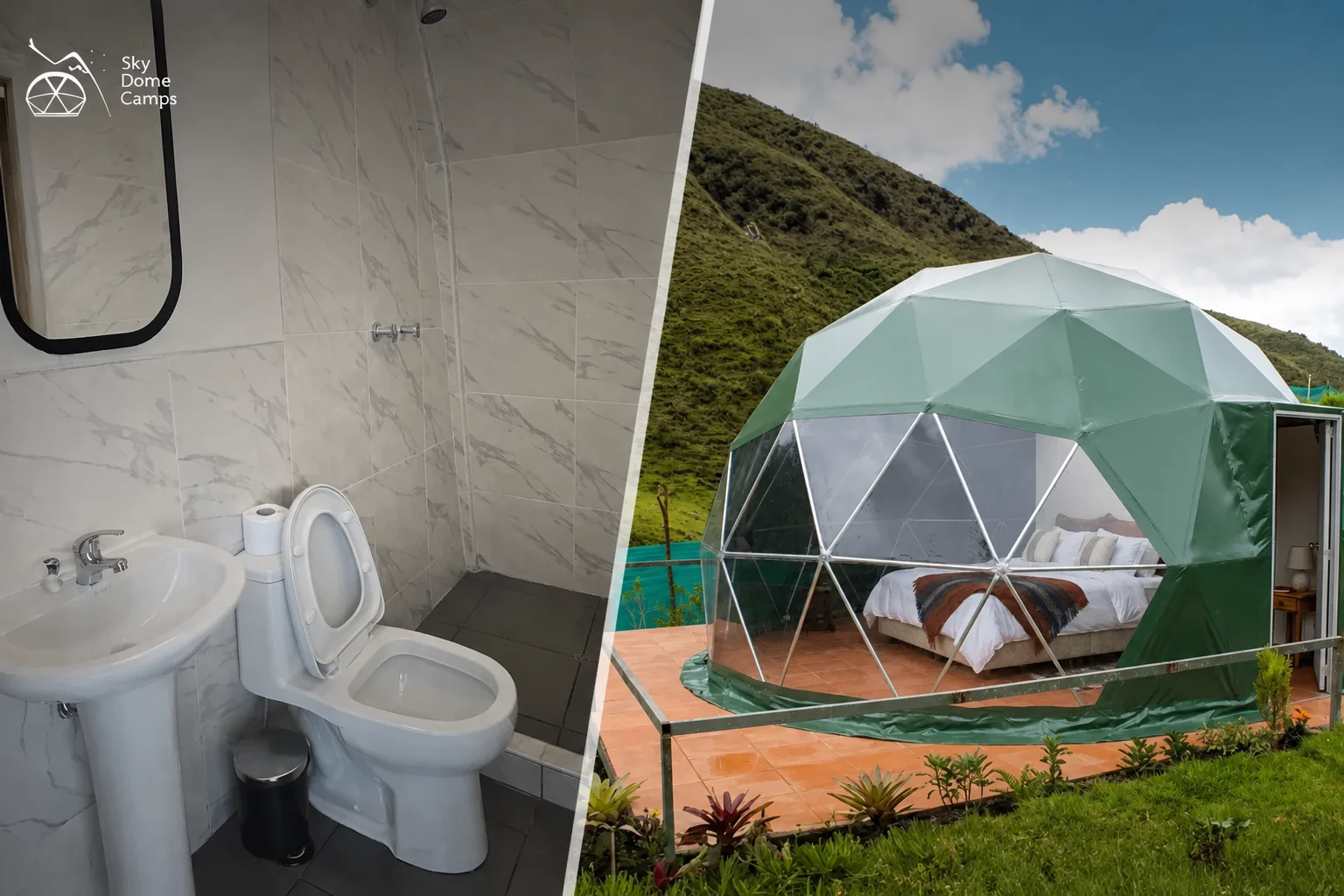
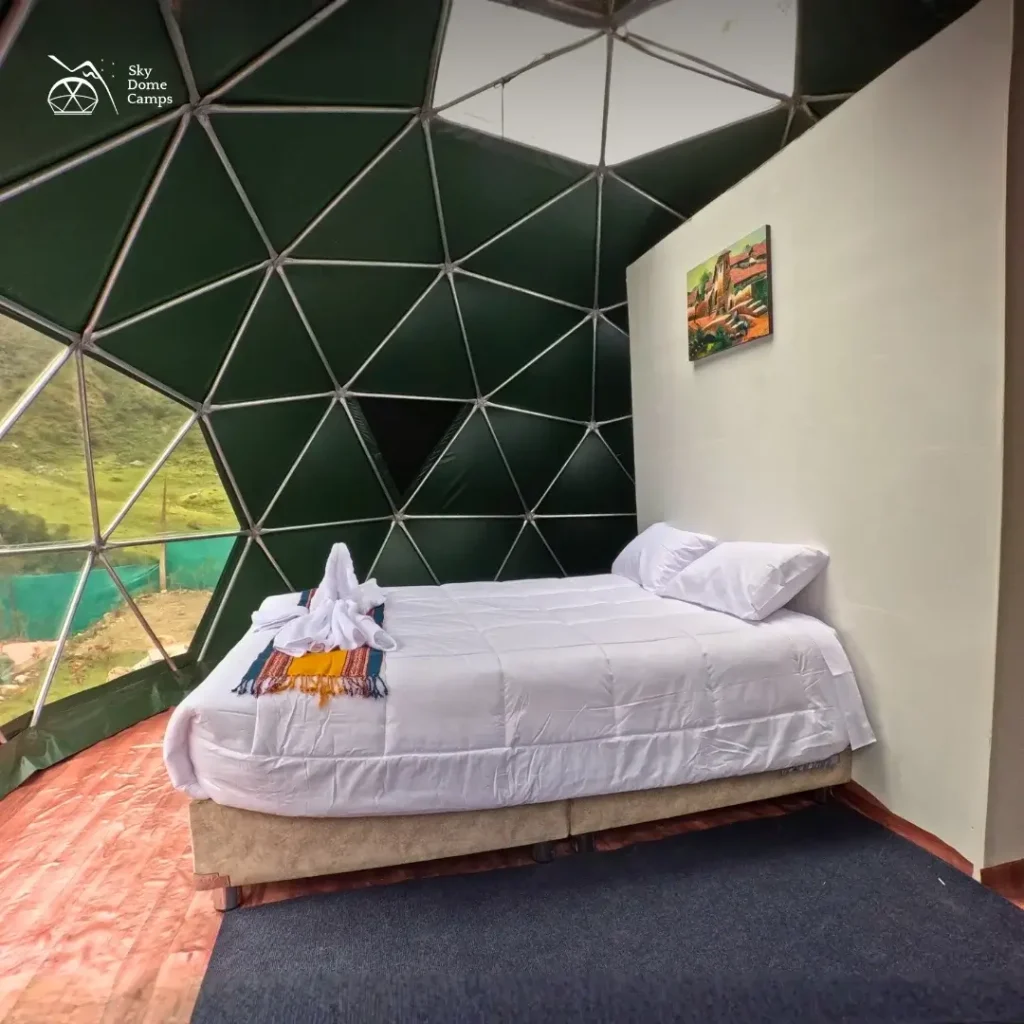
This includes the development of dome-based camps, such as those offered by Sky Dome Camps, where accommodation integrates elements traditionally associated with small-scale hotels:
- insulated sleeping structures
- organized camp layouts
- and most notably, private bathrooms within each unit
These changes reflect a broader trend in high-altitude travel: maintaining the integrity of the route while improving the quality of the experience.
Inside a Dome Bathroom — What Actually Changes
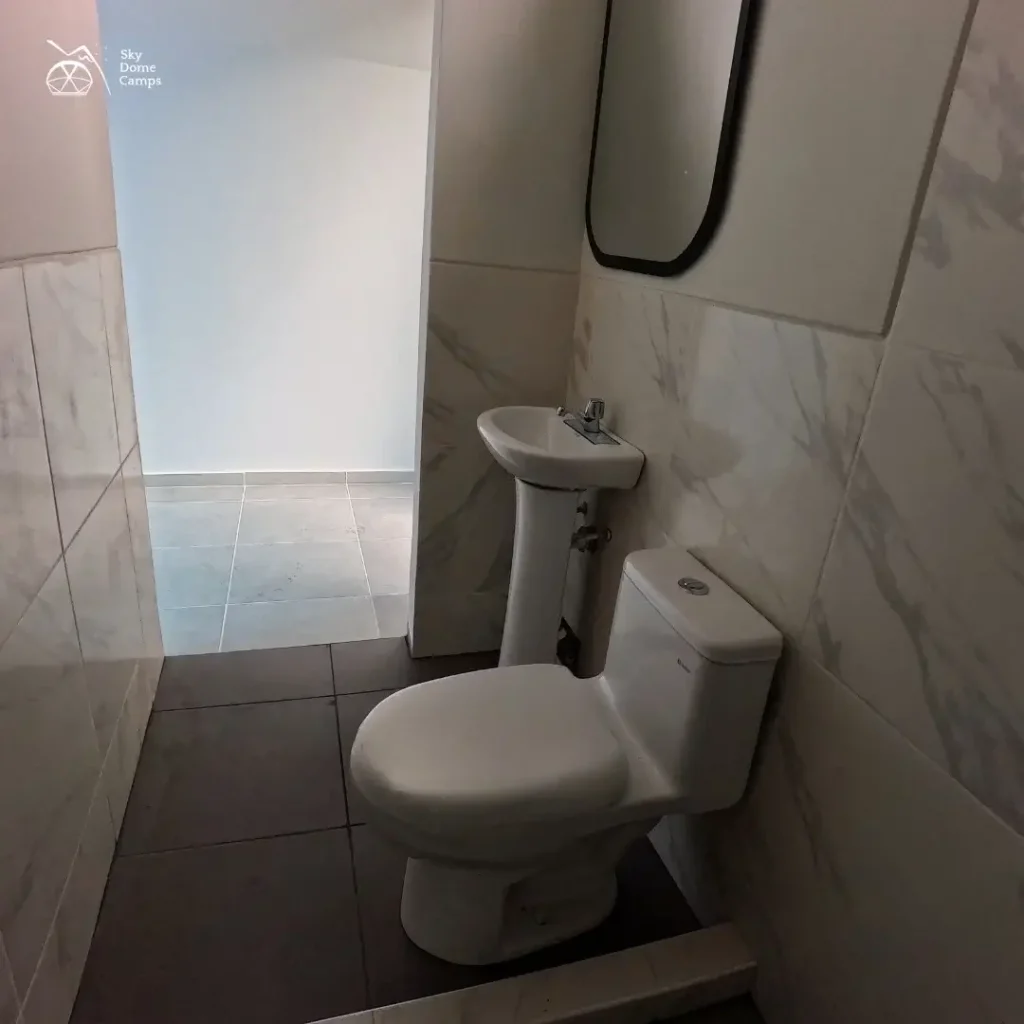
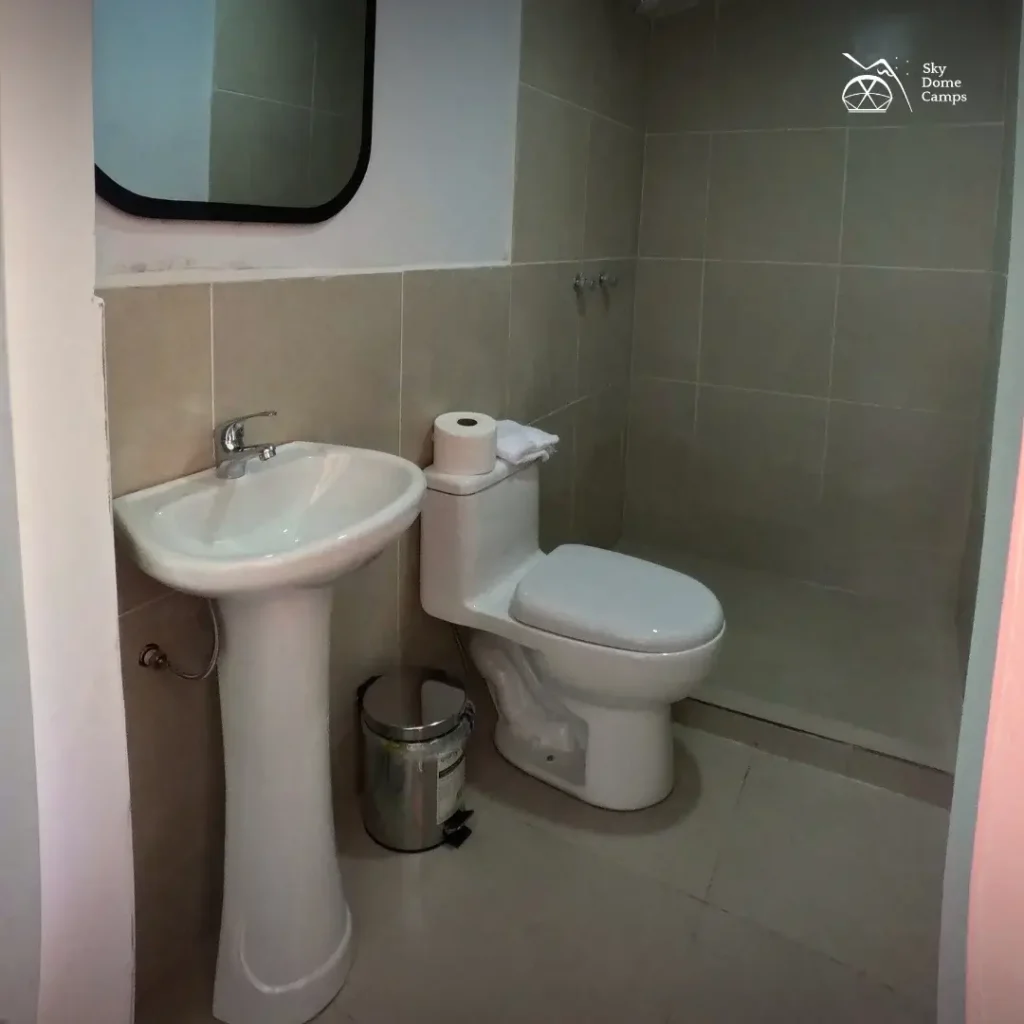
At first glance, the difference may seem simple. A private bathroom includes familiar elements: a toilet, a sink, and a shower within an enclosed space.
But in the context of a multi-day trek, the impact is more significant.
Instead of leaving your sleeping area and navigating cold temperatures or darkness, everything remains within your immediate environment. The space is clean, structured, and protected from external conditions.
This creates something that is often missing in traditional trekking setups: control.
Control over when you rest, when you recover, and how you manage your routine in a setting that is otherwise unpredictable.
Comfort Comparison — Campsite vs Dome Experience
The difference becomes clearer when comparing how each setup affects your daily experience on the trail.
Salkantay Trek Comfort Comparison
| Aspect | Traditional Campsite | Dome Experience |
| Bathroom Access | Shared toilet tents, often outside sleeping area | Private bathroom inside or attached to your dome |
| Privacy | Limited, especially during peak hours | Full privacy at any time |
| Night Use | Requires leaving tent in cold, darkness | Immediate access within your space |
| Hygiene Level | Basic and shared | Controlled, personal environment |
| Shower Availability | Rare or very limited | Available within private setup |
| Comfort After Trekking | Functional, minimal recovery support | Supports relaxation and physical recovery |
| Weather Exposure | High when accessing facilities | Fully protected and enclosed |
| Overall Experience | Expedition-style | Structured, comfort-oriented trekking |
The distinction is not about replacing the adventure, but about how much control you retain over your environment while experiencing it.
The Psychological Difference
Beyond physical comfort, the impact of private infrastructure is also psychological.
In a traditional campsite, small decisions require planning:
- when to step into the cold
- how to manage shared facilities
- how to adapt to limited privacy
With a private setup, that layer disappears.
The experience becomes more fluid. Routines feel familiar. The environment feels more stable.
The trek stops feeling like something you need to manage, and starts feeling like something you can fully engage with.
How This Changes the Entire Trek
When basic needs are resolved efficiently, everything else improves.
- Rest becomes deeper
- Recovery becomes faster
- Energy levels remain more stable
- Attention shifts back to the landscape
The Salkantay Trek is still physically demanding. The altitude, terrain, and distance remain the same.
What changes is how much of your energy is spent adapting to discomfort, versus experiencing the environment around you.
Who This Upgrade Matters Most For
This type of comfort is not necessary for everyone. But for many travelers, it can significantly improve the experience.
It is especially relevant for:
- travelers who prefer not to camp
- first-time trekkers at altitude
- couples seeking more privacy
- comfort-oriented adventurers
- those comparing Salkantay with more structured routes
For these profiles, infrastructure becomes a deciding factor.
Redefining What “Comfort” Means on the Trail
The most important upgrades on a trek are not always the most visible ones. They are the details that shape how each day unfolds.
Bathroom access is one of those details.
The Salkantay Trek itself has not changed. It remains one of the most diverse and rewarding routes to Machu Picchu. What has changed is the way travelers can experience it. And in many cases, that difference begins with something as simple, and as essential, as a door you don’t have to step outside to reach.